29/12/2025 | han.vo@elsanow.io


Teacher quality is crucial: Research shows teachers influence student achievement more than any other school factor. Yet in the Southeast Asia (SEA) region, many educators struggle to meet evolving competency demands, particularly essential skills like English communication in the classroom.
Current Challenges in Teacher Competency and Teacher Education
Kiểm tra phát âm với bài tập sau:

A UNESCO (2016) study found that teachers’ low confidence and competency are often due to being overwhelmed by competing demands on their time, such as implementing multiple mandated learning frameworks and managing increasing administrative tasks.
Despite ongoing efforts in teacher education, many teachers report that training programs focus more on qualifications and diplomas than on practical skills and knowledge needed to improve daily teaching and learning (UNESCO, 2016).
The SEA Teachers Competency Framework
Developed by the Teachers’ Council of Thailand with input from Ministries of Education in 11 ASEAN countries, this framework defines the skills, knowledge, behaviors, and attributes required for 21st-century teachers in the region. (SEAMEO INNOTECH, 2018)
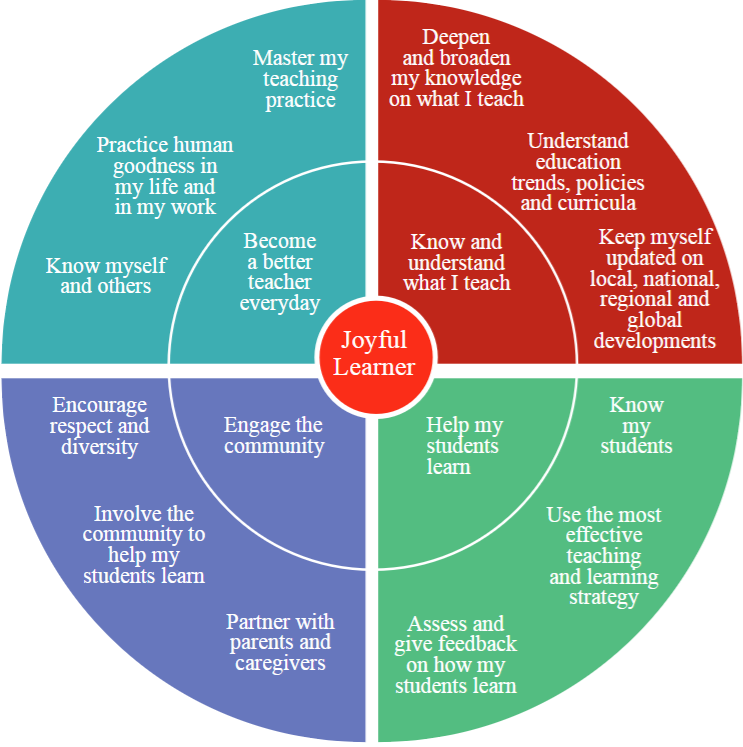
Southeast Asia Teachers Competency Framework
With such high and complex regional standards, teachers face significant pressure to continuously update and apply new knowledge. However, not all teachers or countries have sufficient resources for professional development, leading to gaps in essential skills, particularly in communication and English language proficiency.
In an article published by VNExpress (2025), a survey by the education department in Vietnam’s largest city found that 31% of teachers had English proficiency below the intermediate (B1) level. This skills gap is concerning, as teachers must be confident in both subject matter and language to deliver quality education.
| You may be interested in: Teachers roles in the education system |
How can teachers tackle this problem?
With artificial intelligence (AI) emerging as a powerful ally, teachers now have new ways to boost their professional growth. AI-driven tools help overcome barriers to competency development and give teachers access to a world of knowledge, most of which is in English. Key benefits of AI for teachers include:
- Personalized Coaching and Feedback: AI platforms offer on-demand coaching, especially for language and communication skills. Instant, tailored feedback helps teachers refine their abilities more effectively than occasional workshops.
- Reducing Administrative Load: AI automates routine tasks like grading, attendance, and reporting, freeing up time for teachers to focus on learning new skills and improving lesson quality, reducing burnout and supporting ongoing development.
- Smart Lesson Planning and Resources: AI recommends relevant resources and helps adapt lesson plans to student needs, allowing teachers to spend less time on preparation and more on teaching and engaging with students.
Overall, AI solutions expand what teachers can achieve by providing personalized support and greater efficiency, enabling continuous improvement in both pedagogy and subject expertise.
AI in Action: Upskilling Teachers in English
At ELSA, we believe teachers are the backbone of education. Our partnership with Vinschool,a leading private school system in Vietnam, demonstrates how AI can enhance teacher competency.
ELSA and Vinschool representatives in the MOU signing ceremony (Hanoi, Nov 2025)
Through this collaboration, Vinschool’s teachers access ELSA’s AI-driven speaking coach, tailored to everyday classroom interactions, with instant feedback on English pronunciation and fluency. The program combines personalized learning paths, specialized courses, and progress tracking, all designed to meet teachers’ specific needs. This empowers educators to use English more confidently with their young learners, enriching the English-speaking environment in Vinschool classrooms.
ELSA and Vinschool officially signed a partnership agreement (Hanoi, Nov 2025)
This success story shows how AI technology can elevate teachers’ language skills and improve teaching outcomes. By adopting AI tools, school leaders help their teachers become more competent and future-ready. Importantly, AI support doesn’t replace the human touch: it amplifies it, allowing teachers to focus on what they do best.
To explore how AI can help upskill your teaching staff, you can request a demo of ELSA’s solution and discover the impact of an AI-powered English coaching program for your school here.
References:
UNESCO. (2016a). 2015 ERI-Net Regional Study on Transversal Competencies in Education Policy and Practice (Phase III): Preparing and Supporting Teachers in the Asia-Pacific to Meet the Challenges of 21st-Century Learning: Regional Synthesis Report. https://unesdoc.unesco.org/ark:/48223/ pf0000246852
UNESCO. (2016b). Teachers in the Asia-Pacific: Career Progression and Professional Development. https://unesdoc.unesco.org/ark:/48223/pf0000246011
Innotech, S. (2018). Southeast Asia Teachers Competency Framework (SEA-TCF). Bangkok: The Teachers’ Council of Thailand. https://www.criced.tsukuba.ac.jp/math/seameo/2019/pdf/SEA-TCF%20BOOK.pdf
Nguyen, L. (2025, May 8). Nearly a 3rd of teachers in Vietnam’s largest city have low English proficiency. VnExpress International – Latest News, Business, Travel and Analysis From Vietnam. https://e.vnexpress.net/news/news/education/nearly-a-3rd-of-teachers-in-vietnam-s-largest-city-have-low-english-proficiency-4883285.html
ELSA CORP. (2025, December 1). ELSA and VinSchool partner to elevate English communication for preschool teachers in Vietnam! https://www.linkedin.com/posts/elsa-corp_elsa-edtech-ai-activity-7401180251512459264-GmCg?utm_source=share&utm_medium=member_desktop&rcm=ACoAADpM-3YBk2vKI5-b3ljaHS_nhyO6Ol2SijU