06/01/2026 | han.vo@elsanow.io



In today’s interconnected world, a university degree is no longer the sole ticket to career success. Employers across Asia and beyond are increasingly prioritizing one critical skill: the ability to communicate effectively in English. Yet despite years of English education, many Asian university graduates struggle when it comes to spoken English—a gap that can significantly impact their employability and career mobility.
The Communication Challenge in Asian Universities
Across Thailand, Vietnam, Japan, and other Asian countries, students often excel in written English tests and grammar exercises. They can analyze literature, write research papers, and ace standardized exams. But when asked to present ideas in a meeting, negotiate with international clients, or participate in video conferences, many freeze.
Kiểm tra phát âm với bài tập sau:

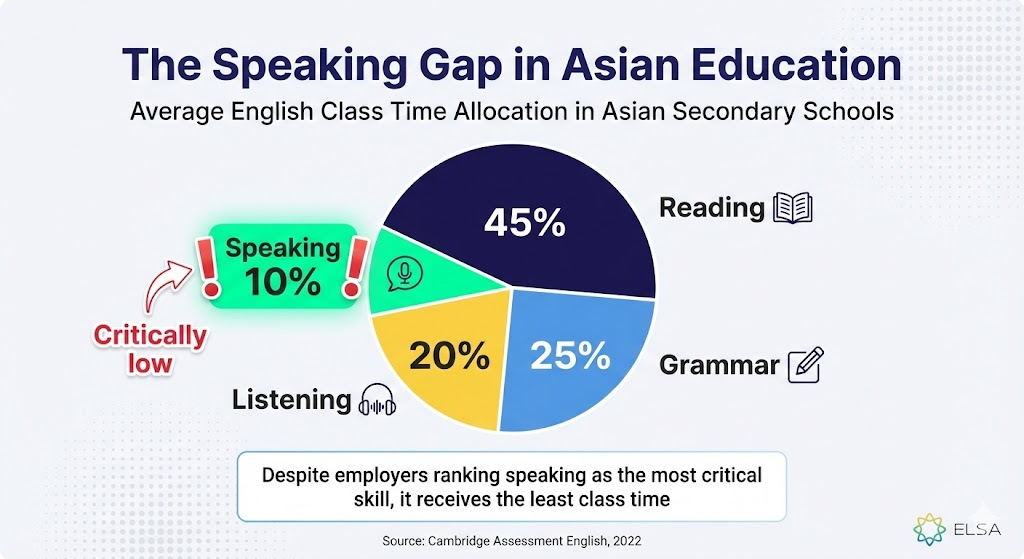
This disconnect isn’t surprising. Traditional English education in Asia has focused heavily on receptive skills—reading, listening, and grammar knowledge—while neglecting productive skills like speaking. According to a 2022 study by Cambridge Assessment English, only 23% of class time in typical Asian secondary schools is devoted to speaking practice, despite employers ranking it as the most critical English skill. In classrooms with 40-50 students, individual speaking practice is nearly impossible, and the fear of making mistakes in front of peers creates a significant barrier.
Why Spoken English Matters for Career Success
The workplace reality is clear: communication drives careers. Research from the Asian Development Bank’s 2023 report on skills and employment found that 78% of multinational companies in Southeast Asia cite “English communication skills” as their top hiring criterion—ranking it above technical expertise or academic credentials.
For Asian graduates, strong spoken English opens doors to global mobility, higher earning potential, and leadership advancement. A 2023 study published in the Journal of Language and Social Psychology found that Asian professionals with advanced English speaking proficiency earn 25-35% higher salaries than peers with similar qualifications but limited speaking ability.
Conversely, poor spoken English limits opportunities. Talented graduates find themselves passed over for promotions or excluded from international projects—not due to lack of expertise, but inability to communicate it.
The Technology Solution: AI-Powered Speaking Practice
Forward-thinking universities across Asia are addressing this gap through AI-powered speaking tools that provide what traditional classrooms cannot: unlimited practice, instant feedback, and personalized learning paths.
ELSA (English Language Speech Assistant) represents this new approach. Using artificial intelligence, ELSA provides students with a judgment-free environment to practice speaking, receive immediate pronunciation feedback, and build confidence through repetition—all accessible 24/7 from a mobile device. AI speaking tools help students develop real-world conversation skills through role-play scenarios, natural fluency, and measurable progress through data-driven insights.
Real Results: The first university in Thailand to implement AI
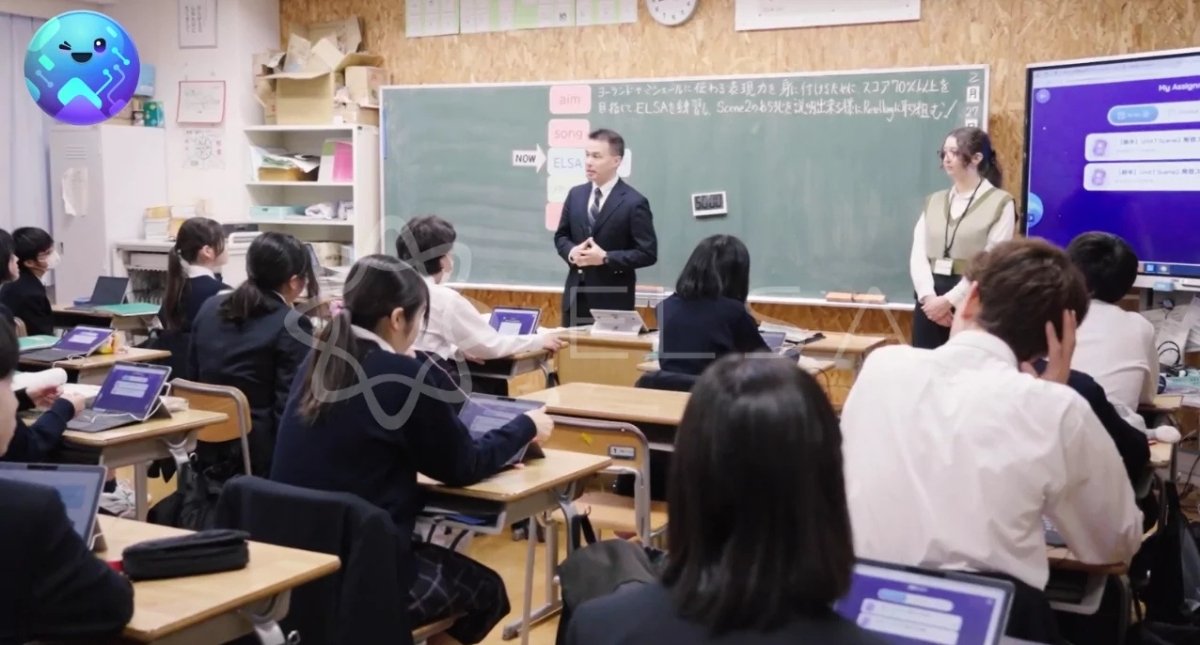
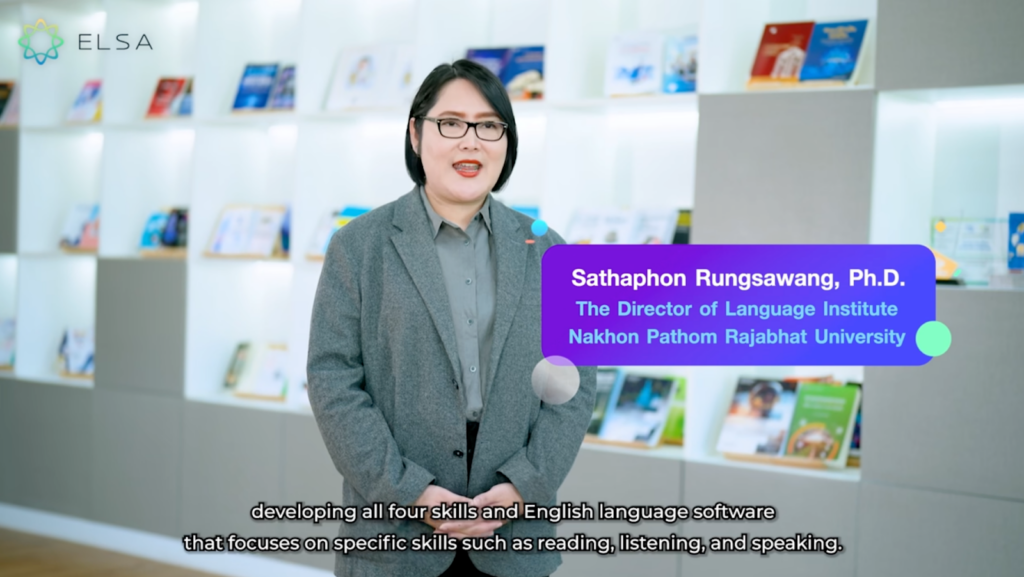
Nakhon Pathom Rajabhat University (NPRU) in Thailand provides a compelling example of transformation through AI-powered speaking tools. The university’s Language Institute integrated ELSA Speak across its programs to develop students’ speaking abilities—a skill that traditional large-group classes struggled to address effectively.
A representative from the Language Institute explained: “The excellent backend system, lessons, and in-system evaluations provide data that truly supports student development. Since implementing ELSA, our students no longer have to wait for staff. They can practice whenever they are.”
For students, the impact was deeply personal. One NPRU student shared: “Personally, my English foundation wasn’t very strong. I used to feel quite embarrassed practicing speaking with others. ELSA helps us know our weaknesses better and pronounce words more accurately. From not being confident speaking with real people, we become much more confident.”
Another student described the experience: “It truly feels like having a personal AI tutor. I definitely recommend ELSA to my friends because it’s easy to use and delivers genuine results.”
The operational benefits were equally significant: “Not only have the students improved their English, but the staff’s workflow has also become much more efficient,” the institute reported. The platform’s dashboard and automated tracking eliminated manual monitoring, allowing language center staff to focus on higher-value instruction.
Watch the full NPRU testimonial here.
Preparing for Tomorrow’s Workplace
Universities that invest in spoken English development aren’t just improving test scores—they’re fundamentally enhancing graduate employability. For Asian universities, this represents a competitive advantage. Institutions that demonstrate strong employment outcomes attract better students and build stronger industry partnerships.
The integration of AI-powered tools like ELSA offers a scalable solution. Unlike hiring dozens of native-speaker tutors, AI provides personalized attention to hundreds or thousands of students simultaneously—at a fraction of the cost. As NPRU’s Language Institute noted, the platform “supports a large number of users and can be accessed anytime, anywhere”—solving the fundamental challenge of providing individual speaking practice without overwhelming staff resources.

The Path Forward
As the global economy becomes increasingly interconnected, spoken English proficiency will only grow in importance. Asian universities that recognize this reality—and provide students with modern tools to develop these skills—will see their graduates thrive in international careers.
The question isn’t whether spoken English matters for career success. The evidence is clear: it does. The question is whether universities will equip students with the practical communication skills they need to compete globally.
Technology has made this achievable. The results from institutions like NPRU demonstrate that with the right tools, consistent practice, and institutional support, Asian students can overcome the barriers of embarrassment and limited practice opportunities to develop genuine speaking confidence—the foundation for successful global careers.
Ready to transform your institution’s English program? Learn how ELSA can help your students develop career-ready speaking skills.
Sources:
- Cambridge Assessment English. (2022). The State of English Language Teaching in Asia. https://www.cambridgeenglish.org/
- Asian Development Bank. (2023). Skills and Employment in Southeast Asia: Trends and Outlook. https://www.adb.org/publications/skills-employment-southeast-asia
- Journal of Language and Social Psychology. (2023). English Proficiency and Career Advancement in Asian Markets. https://journals.sagepub.com/home/jls
- NPRU Language Institute. (2025). ELSA Implementation Case Study. https://www.linkedin.com/feed/update/urn:li:activity:7405094077358170114