31/08/2026 | Admin


Cấu trúc no sooner là một trong những cấu trúc quan trọng trong giao tiếp tiếng Anh. Tuy nhiên, nhiều người vẫn gặp khó khăn khi sử dụng cấu trúc này đúng cách. Hãy cùng ELSA Speak khám phá cấu trúc, cách dùng và bài tập của no sooner nhé!
📌 Key Takeaways
Kiểm tra phát âm với bài tập sau:

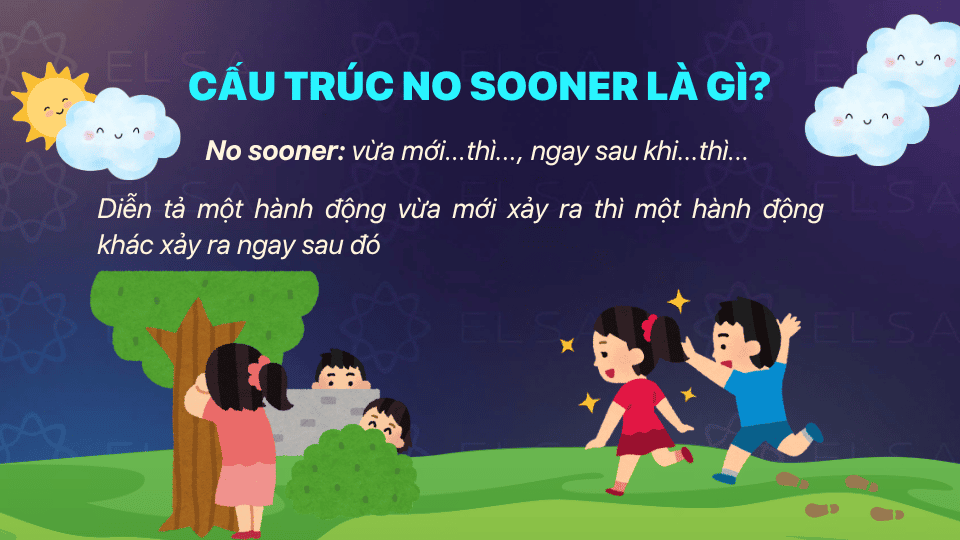
Cấu trúc no sooner hay no sooner … than có nghĩa là “vừa mới… thì…”, “ngay sau khi… thì…”, thường được dùng để diễn tả một hành động vừa mới xảy ra thì một hành động khác xảy ra ngay sau đó.
Bạn vừa đọc 11 mục trong bài này. Nói thử xem phát âm chuẩn được bao nhiêu.
Cấu trúc No sooner:
- Cấu trúc cơ bản: S + had + no sooner + V3/ed + than + S + V2/ed
- Dạng đảo ngữ: No sooner + had + S + V3/ed + than + S + V2/ed
- Thì hiện tại: S + do/does + no sooner + V(nguyên mẫu) + than + S + V(s/es)
Cấu trúc No sooner là gì?
Cấu trúc no sooner hay no sooner … than có nghĩa là “vừa mới… thì…”, “ngay sau khi… thì…”, thường được dùng để diễn tả một hành động vừa mới xảy ra thì một hành động khác xảy ra ngay sau đó.
Ví dụ:
- No sooner had I arrived at the station than the train departed. (Tôi vừa mới đến nhà ga thì tàu đã khởi hành.)
- No sooner had she finished her meal than her phone rang. (Cô ấy vừa mới ăn xong bữa thì điện thoại reo.)
Có thể bạn quan tâm:
- Cấu trúc would rather: Công thức, cách dùng và bài tập có đáp án
- Sau after dùng thì gì? Công thức, cách dùng và ví dụ cụ thể
- Công thức, cách dùng thì hiện tại tiếp diễn (Present Continuous)
Cách dùng No sooner trong tiếng Anh
No sooner … than … được dùng để diễn tả hai hành động xảy ra liên tiếp trong quá khứ, trong đó hành động thứ hai xảy ra ngay sau khi hành động thứ nhất vừa hoàn thành.
- Mệnh đề chứa no sooner: Hành động xảy ra trước
- Mệnh đề chứa than: Hành động xảy ra sau
Ví dụ: No sooner had the meeting ended than everyone rushed out of the room. (Cuộc họp vừa kết thúc thì mọi người vội ra khỏi phòng.)
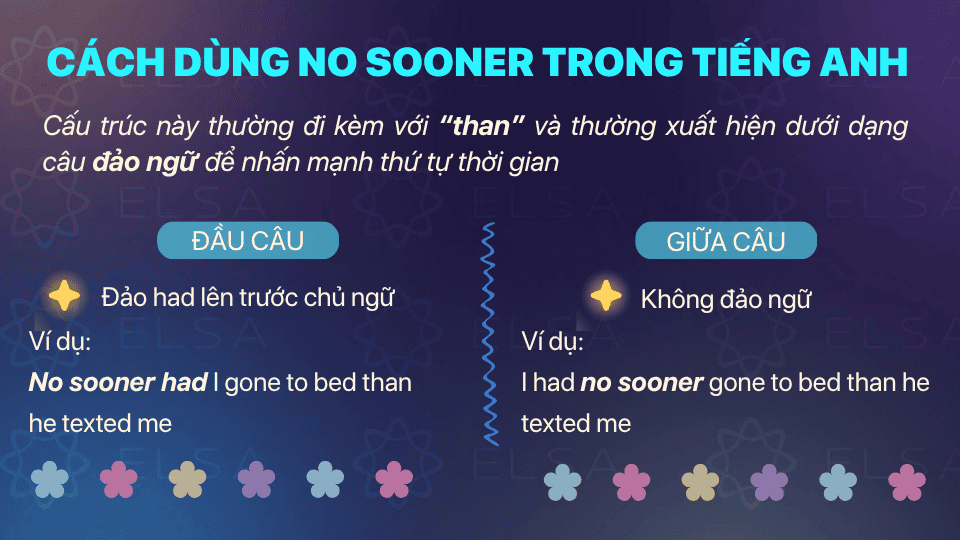
Tùy vào việc câu được viết ở dạng thông thường hay dạng đảo ngữ, no sooner sẽ có vị trí khác nhau, cụ thể:
| Vị trí | Đặc điểm | Ví dụ |
| Đầu câu | Phải đảo trợ động từ had lên trước chủ ngữ | No sooner had I gone to bed than he texted me. (Tôi vừa mới đi ngủ thì anh ấy nhắn tin cho tôi.) |
| Giữa câu | Không đảo ngữ | I had no sooner gone to bed than he texted me. (Tôi vừa mới đi ngủ thì anh ấy nhắn tin cho tôi.) |
Các cấu trúc No sooner than phổ biến
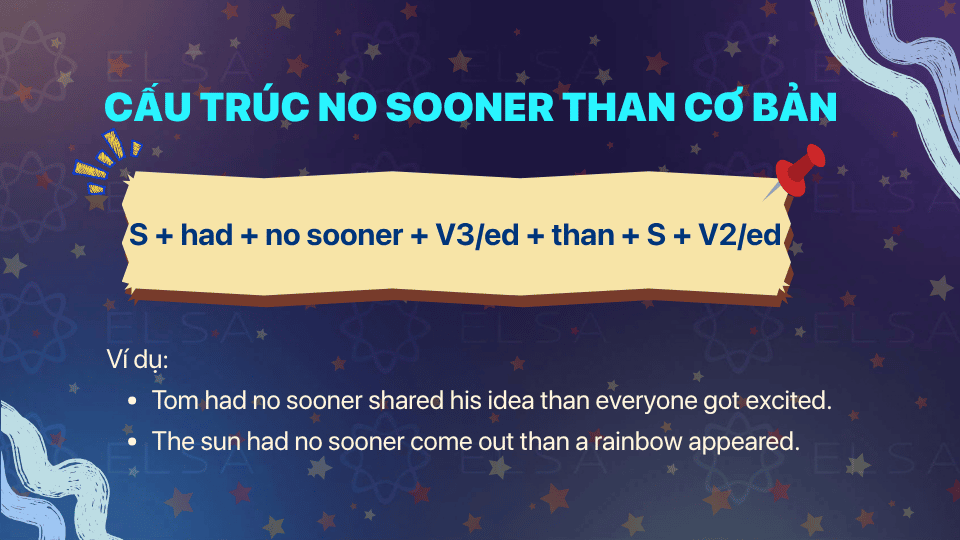
Cấu trúc No sooner than cơ bản
No sooner … than … là cấu trúc dùng để diễn tả một hành động vừa mới xảy ra hoặc vừa hoàn thành thì một hành động khác xảy ra ngay sau đó. Ở dạng cơ bản, no sooner không đứng đầu câu mà nằm sau chủ ngữ và trợ động từ had.
Cấu trúc:
| S + had + no sooner + V3/ed + than + S + V2/ed |
Ví dụ:
- Tom had no sooner shared his idea than everyone got excited. (Tom vừa đưa ra ý kiến thì tất cả đều hào hứng.)
- The sun had no sooner come out than a rainbow appeared. (Trời vừa hửng nắng thì cầu vồng xuất hiện.)
Có thể bạn quan tâm:
- Start to V hay Ving? Cách dùng cấu trúc start
- Cấu trúc The Last Time trong tiếng Anh và bài tập vận dụng chi tiết
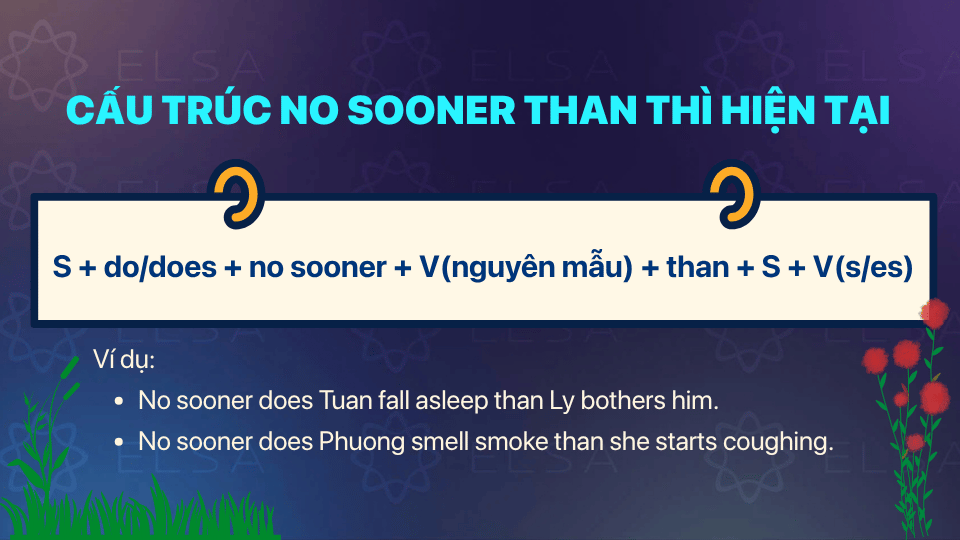
Cấu trúc No sooner than thì hiện tại
Cấu trúc no sooner dùng với thì hiện tại thường được dùng để diễn tả một thói quen hoặc một quy luật xảy ra ngay sau nhau.
Cấu trúc:
| S + do/does + no sooner + V(nguyên mẫu) + than + S + V(s/es) |
Ví dụ:
- No sooner does Tuan fall asleep than Ly bothers him. (Tuấn cứ vừa ngủ thì Ly lại làm phiền.)
- No sooner does Phuong smell smoke than she starts coughing. (Phương cứ ngửi thấy mùi khói là lại ho.)
Cấu trúc No sooner than thì quá khứ
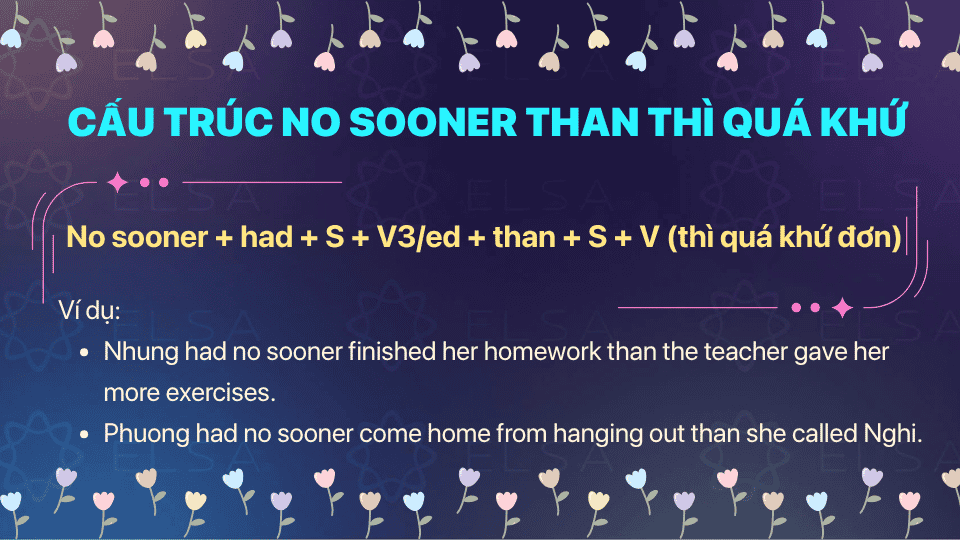
Dùng để diễn tả hai hành động xảy ra nối tiếp nhau trong quá khứ, trong đó hành động này vừa mới kết thúc thì hành động kia diễn ra ngay lập tức
Cấu trúc:
| S + had + no sooner + V3/ed + than + S + V2/ed |
Ví dụ:
- Nhung had no sooner finished her homework than the teacher gave her more exercises. (Nhung vừa làm bài tập xong thì giáo viên lại giao thêm bài tập.)
- Phuong had no sooner come home from hanging out than she called Nghi. (Phương vừa đi chơi về là đã gọi điện cho Nghi.)
Cấu trúc No sooner với Will
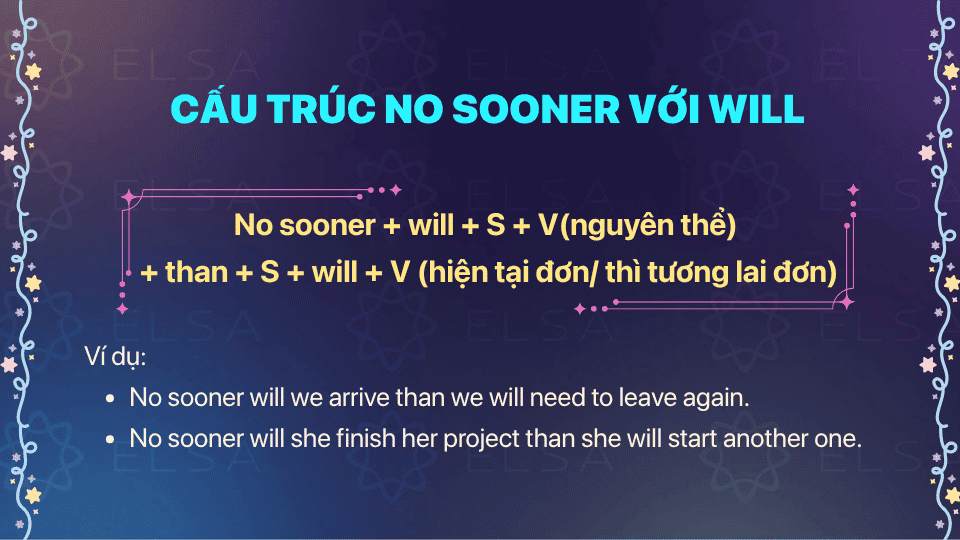
Cấu trúc no sooner với will được dùng để dự đoán hoặc nhấn mạnh rằng một hành động trong tương lai sẽ xảy ra ngay sau một hành động khác.
| No sooner + will + S + V (nguyên thể) + than + S + V (hiện tại đơn/ thì tương lai đơn) |
Ví dụ:
- No sooner will we arrive than we will need to leave again. (Chúng ta vừa đến thì sẽ phải rời đi ngay.)
- No sooner will she finish her project than she will start another one. (Cô ấy vừa hoàn thành dự án thì sẽ bắt đầu một dự án khác.)
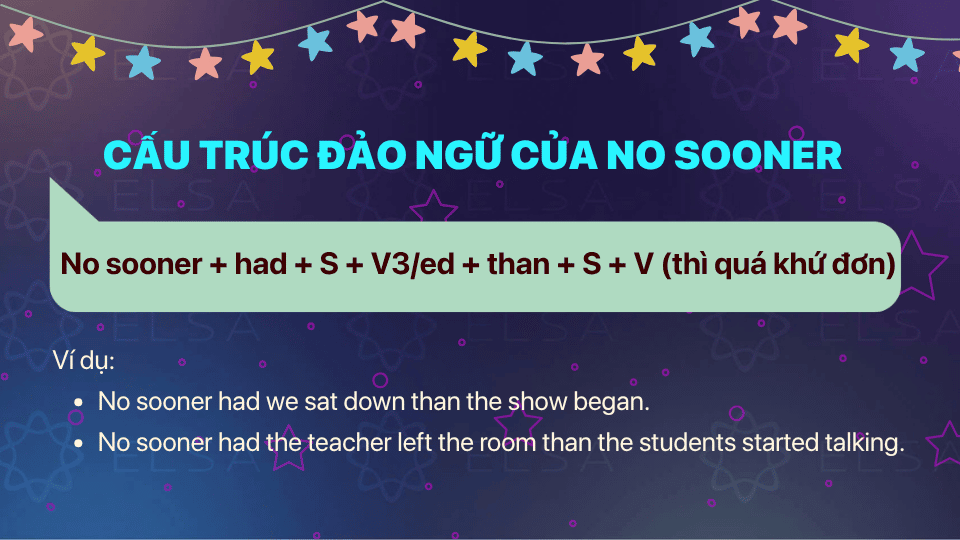
Cấu trúc đảo ngữ No sooner
Khi no sooner được đưa lên đầu câu để nhấn mạnh việc một hành động vừa mới xảy ra thì hành động khác đã xảy ra ngay sau đó, câu phải sử dụng đảo ngữ. Cụ thể, trợ động từ had được đưa lên trước chủ ngữ, trong khi động từ chính của mệnh đề thứ nhất vẫn ở dạng V3/ed.
Cấu trúc:
| No sooner + had + S + V3/ed + than + S + V (thì quá khứ đơn) |
Ví dụ:
- No sooner had we sat down than the show began. (Chúng tôi vừa ngồi xuống thì buổi biểu diễn bắt đầu.)
- No sooner had the teacher left the room than the students started talking. (Giáo viên vừa rời khỏi phòng thì học sinh bắt đầu nói chuyện.)
Các cấu trúc có thể thay No sooner
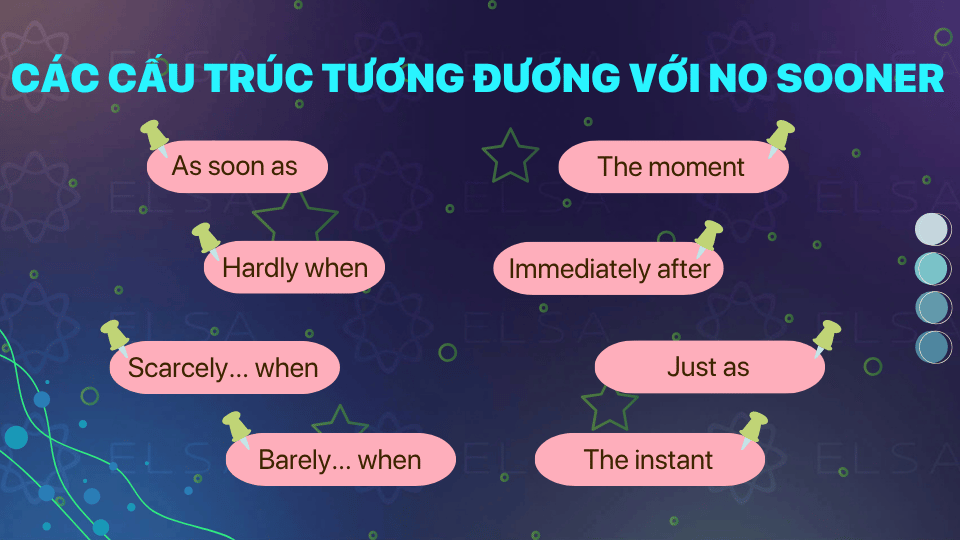
Ngoài cấu trúc no sooner than, bạn có thể sử dụng những cấu trúc dưới đây để nói về hai hành động xảy ra liên tiếp:
| Cấu trúc | Công thức | Ví dụ |
| As soon as | As soon as + S + V2/ed, S + V2/ed | As soon as I arrived home, it started raining. (Ngay khi tôi về đến nhà, trời bắt đầu mưa.) |
| Hardly when | Hardly + had + S + V3/ed + when + S + V2/ed | Hardly had I sat down when the phone rang. (Tôi hầu như chưa kịp ngồi xuống thì điện thoại reo.) |
| Scarcely… when | Scarcely + had + S + V3/ed + when + S + V2/ed | Scarcely had we left the house when it began to snow. (Chúng tôi chưa kịp rời khỏi nhà thì tuyết bắt đầu rơi.) |
| Barely… when | Barely + had + S + V3/ed + when + S + V2/ed | Barely had I closed my eyes when the alarm went off. (Tôi vừa mới nhắm mắt thì chuông báo thức kêu.) |
| The moment | Ngay lúc | The moment I saw her, I knew something was wrong. (Ngay lúc tôi nhìn thấy cô ấy, tôi biết có điều gì đó không ổn.) |
| Immediately after | Ngay sau khi | Immediately after the concert ended, fans rushed to the stage. (Ngay sau khi buổi hòa nhạc kết thúc, người hâm mộ đổ xô lên sân khấu.) |
| Just as | Ngay khi | Just as we were leaving, our friends arrived. (Ngay khi chúng tôi sắp rời đi, bạn bè của chúng tôi đến.) |
| The instant | Ngay tức khắc | The instant the door opened, the cat ran out. (Ngay tức khắc cửa mở, con mèo chạy ra ngoài.) |
Các cấu trúc viết lại câu với No sooner than
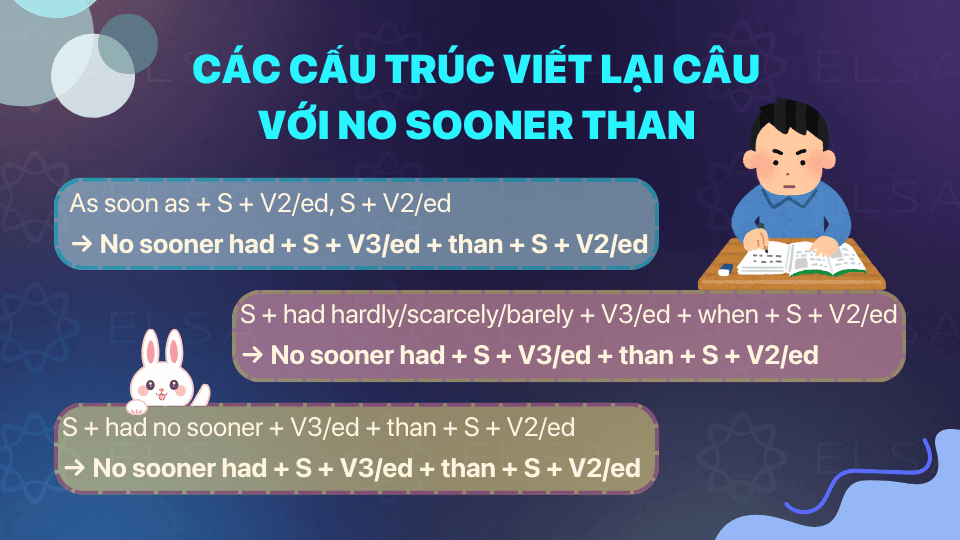
Để sử dụng cấu trúc No sooner…than hiệu quả, nhất là khi làm bài tập viết lại câu, bạn cần nắm rõ các công thức viết lại câu trong bảng dưới đây:
| Cấu trúc ban đầu | Cấu trúc với No sooner than | Ví dụ |
| As soon as + S + V2/ed, S + V2/ed | No sooner had + S + V3/ed + than + S + V2/ed | As soon as the concert tickets went on sale, they sold out. (Ngay sau khi mở bán, vé concert đã bán hết.) → No sooner had the concert tickets gone on sale than they sold out. |
| S + had hardly/scarcely/barely + V3/ed + when + S + V2/ed | No sooner had + S + V3/ed + than + S + V2/ed | The sun had hardly come out when it started raining again. (Trời vừa nắng thì lại mưa.) → No sooner had the sun come out than it started raining again. |
| S + had no sooner + V3/ed + than + S + V2/ed | No sooner had + S + V3/ed + than + S + V2/ed | The students had no sooner finished the online test than they found out their scores. (Ngay sau khi làm xong bài kiểm tra online, các học sinh đã biết điểm.) → No sooner had the students finished the online test than they found out their scores. |
Khi làm dạng bài này, bạn có thể triển khai theo các bước sau:
Câu ban đầu: No sooner had Vy started singing than Thao applauded enthusiastically. (Vy vừa cất tiếng hát thì Thảo đã nhiệt tình vỗ tay.)
Bước 1: Tìm hành động xảy ra trước và hành động xảy ra sau.
Hành động đứng sau No sooner xảy ra trước, hành động đứng sau than xảy ra sau
Ví dụ:
- Hành động xảy ra trước: Vy started singing. (Vy cất tiếng hát.)
- Hành động xảy ra sau: Thao applauded enthusiastically. (Thảo nhiệt tình vỗ tay.)
Bước 2: Chia hành động xảy ra trước về thì quá khứ hoàn thành
Sử dụng công thức had + V3/ed cho mệnh đề chứa No sooner.
Ví dụ: Vy started singing → Vy had started singing…(Vy bắt đầu hát…)
Bước 3: Chia hành động xảy ra sau về thì quá khứ đơn
Mệnh đề đứng sau than sử dụng động từ ở dạng quá khứ đơn
Ví dụ: Thao applauded enthusiastically. (Thảo nhiệt tình vỗ tay.)
Bước 4: Đặt No sooner ở đầu câu, đưa had lên trước và dùng than để nối hai mệnh đề
Ví dụ: No sooner had Vy started singing than Thao applauded enthusiastically. (Vy vừa cất tiếng hát thì Thảo đã nhiệt tình vỗ tay.)
Phân biệt no sooner than với Not only, Not until
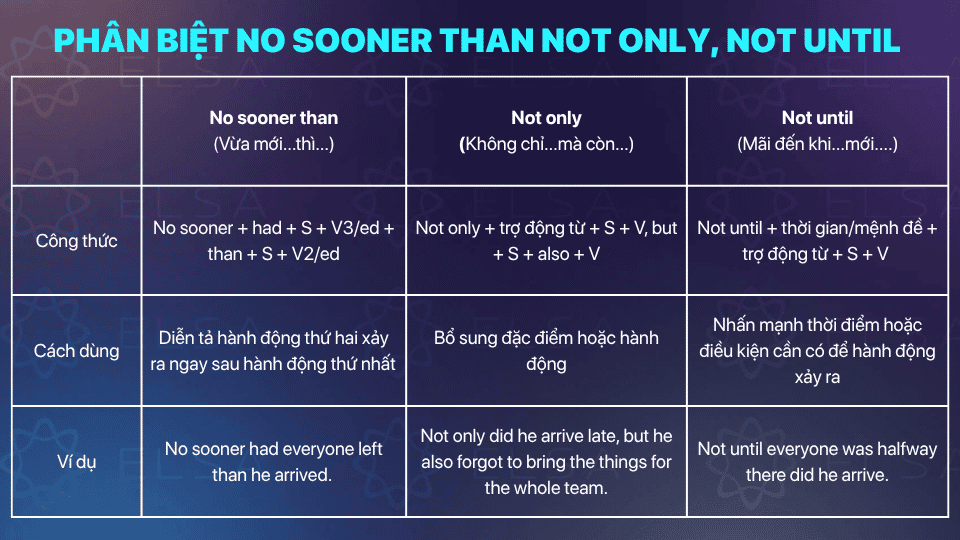
Mặc dù No sooner…than, Not only và Not until đều có thể tạo cấu trúc đảo ngữ, nhưng các cấu trúc này có nghĩa và cách sử dụng khác nhau cần phải nắm rõ:
| No sooner than | Not only | Not until | |
| Nghĩa | Vừa mới…thì… | Không chỉ…mà còn… | Mãi đến khi…mới…. |
| Công thức | No sooner + had + S + V3/ed + than + S + V2/ed | Not only + trợ động từ + S + V, but + S + also + V | Not until + thời gian/mệnh đề + trợ động từ + S + V |
| Cách dùng | Diễn tả hành động thứ hai xảy ra ngay sau hành động thứ nhất | Bổ sung đặc điểm hoặc hành động | Nhấn mạnh thời điểm hoặc điều kiện cần có để hành động xảy ra |
| Ví dụ | No sooner had everyone left than he arrived. (Ngay khi mọi người vừa đi thì anh ấy mới đến.) | Not only did he arrive late, but he also forgot to bring the things for the whole team. (Anh ấy không chỉ đến muộn mà còn quên mang đồ cho cả nhóm.) | Not until everyone was halfway there did he arrive. (Mãi đến khi mọi người đi được nửa đường thì anh ấy mới đến.) |
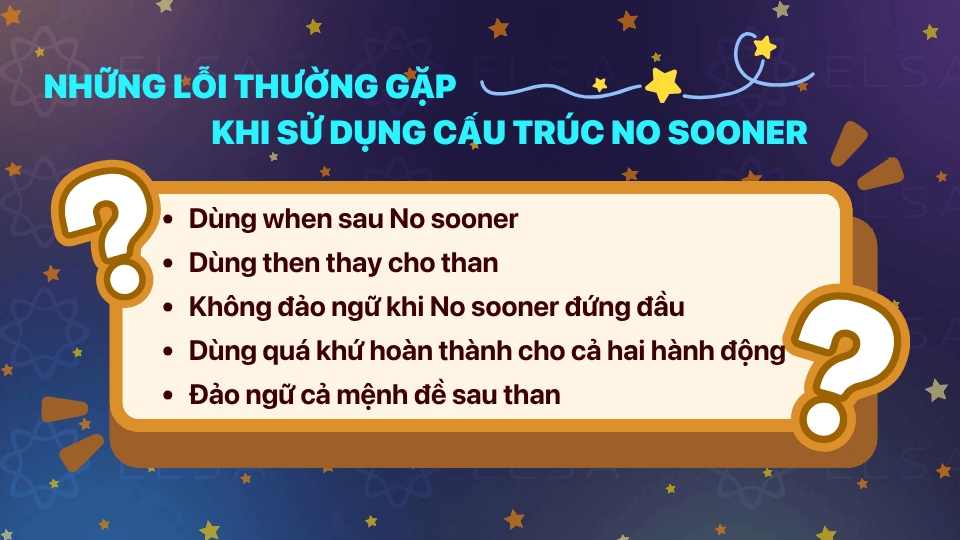
Những lỗi thường gặp khi sử dụng cấu trúc No sooner
Để sử dụng cấu trúc No sooner than một cách chính xác, bạn cần chú ý những lỗi sau đây:
| Lỗi | Ví dụ | Giải thích |
| Dùng when sau No sooner | Sai: No sooner had Nam arrived at the bus stop when the bus departed. Đúng: No sooner had Nam arrived at the bus stop than the bus departed. (Nam vừa mới đến trạm xe buýt thì xe buýt đã rời đi.) | No sooner phải đi với than, không dùng when |
| Dùng then thay cho than | Sai: No sooner had Hao entered the room then he smelled perfume. Đúng: No sooner had Hao entered the room than he smelled perfume. (Hào vừa bước vào phòng đã ngửi thấy mùi nước hoa.) | Cấu trúc cố định là No sooner…than… Nếu dùng then sẽ sai cấu trúc |
| Không đảo ngữ khi No sooner đứng đầu | Sai: No sooner Nam had got on the bus than he felt carsick. Đúng: No sooner had Nam got on the bus than he felt carsick. (Nam vừa lên xe buýt thì đã bị say xe.) | Phải đảo had lên trước chủ ngữ |
| Dùng quá khứ hoàn thành cho cả hai hành động | Sai: No sooner had the dog finished eating than it had fallen asleep. Đúng: No sooner had the dog finished eating than it fell asleep. (Con chó vừa ăn xong đã lăn ra ngủ.) | Hành động sau No sooner dùng quá khứ hoàn thànhHành động sau than thường dùng quá khứ đơn |
| Đảo ngữ cả mệnh đề sau than | Sai: No sooner had Nhi woken up than did she check her email. Đúng: No sooner had Nhi woken up than she checked her email. (Nhi vừa ngủ dậy đã kiểm tra email.) | Mệnh đề sau than giữ nguyên |
Những câu hỏi thường gặp
No sooner + gì?
Trong cấu trúc No sooner … than …, no sooner thường đi với trợ động từ had + chủ ngữ + động từ phân từ II (V3/ed) khi sử dụng ở dạng đảo ngữ.
Hardly when và No sooner than khác gì nhau?
Hardly … when và No sooner … than đều có nghĩa “vừa mới… thì…”. Tuy nhiên:
- Hardly … when: Nhấn mạnh hành động thứ hai xảy ra gần như ngay lập tức sau hành động thứ nhất
- No sooner … than: Nhấn mạnh hành động thứ hai xảy ra ngay sau khi hành động thứ nhất vừa hoàn thành
Hai cấu trúc cũng dùng liên từ khác nhau:
- Hardly đi với when: Hardly had + S + V3/ed + when + S + V2/ed
- No sooner đi với than: No sooner had + S + V3/ed + than + S + V2/ed
No sooner đi với than hay when?
No sooner luôn đi với than trong cấu trúc No sooner … than …, không dùng when.
Bài tập ứng dụng cấu trúc No sooner
Bài tập 1: Viết lại câu với No sooner
- By the time I arrived, they had already eaten dinner.
- She had barely finished her homework when her friends called.
- The teacher had just written the homework on the board when the bell rang.
- We had hardly started the project when we realized we needed more resources.
- The company had no sooner launched the new product than it became a bestseller.
- They had just moved into their new house when they received an invitation to a party.
- The doctor had barely finished the surgery when the patient’s condition worsened.
- The tourists had hardly arrived at the hotel when they decided to go out and explore.
- The team had no sooner won the championship than they started celebrating.
- The baby had just fallen asleep when the doorbell rang.
Đáp án:
- No sooner had I arrived than they had already eaten dinner.
- No sooner had she finished her homework than her friends called.
- No sooner had the teacher written the homework on the board than the bell rang.
- We had no sooner started the project than we realized we needed more resources.
- No sooner had the company launched the new product than it became a bestseller.
- No sooner had they moved into their new house than they received an invitation to a party.
- No sooner had the doctor finished the surgery than the patient’s condition worsened.
- No sooner had the tourists arrived at the hotel than they decided to go out and explore.
- No sooner had the team won the championship than they started celebrating.
- No sooner had the baby fallen asleep than the doorbell rang.
Bài tập 2: Nối câu đơn thành câu hoàn chỉnh sử dụng No sooner
- I finished my homework. My friend called me.
- She ate breakfast. The alarm clock went off.
- He arrived at the party. He met his ex-girlfriend.
- We started the project. We realized it was too difficult.
- She opened the package. She found out it was the wrong gift.
- He started his new job. He received an offer for a promotion.
- They finished their meal. The waiter came to take the order.
- I finished my presentation. The audience started asking questions.
- She started her journey. She got lost in the woods.
- He arrived at the airport. His flight was delayed.
Đáp án:
- No sooner had I finished my homework than my friend called me.
- No sooner had she eaten breakfast than the alarm clock went off.
- No sooner had he arrived at the party than he met his ex-girlfriend.
- No sooner had we started the project than we realized it was too difficult.
- No sooner had she opened the package than she found out it was the wrong gift.
- No sooner had he started his new job than he received an offer for a promotion.
- No sooner had they finished their meal than the waiter came to take the order.
- No sooner had I finished my presentation than the audience started asking questions.
- No sooner had she started her journey than she got lost in the woods.
- No sooner had he arrived at the airport than his flight was delayed.
Bài tập 3: Chọn đáp án đúng
1. ______ Tom arrived did the meeting begin.
A. No sooner
B. Not until
C. Hardly
D. Not only
2. Mai had no sooner closed the window ______ it started to rain.
A. when
B. then
C. than
D. that
3. Hardly had the family started having dinner together ______ Uncle Mike got busy with work again.
A. than
B. when
C. then
D. until
4. No sooner ______ than the police arrived.
A. the fight broke out
B. did the fight break out
C. had the fight broken out
D. the fight had broken out
5. Not only ______ high-quality skincare products, but it also offers discounts of up to 50%.
A. the new store sells
B. does the new store sell
C. did the new store sold
D. the new store does sell
6. No sooner ______ the lights and gone to bed than a burglar broke into the house.
A. the family turned off
B. had the family turned off
C. did the family turn off
D. the family had turned off
7. Not only ______ the piano, but she can also play many other musical instruments.
A. Thu can play
B. can Thu play
C. does Thu plays
D. Thu plays
8. ______ the wedding started did the MC arrive.
A. No sooner
B. Hardly
C. Not until
D. Not only
9. Choose the sentence that has the closest meaning to the following sentence: “As soon as we got ready to leave, the teacher came into the classroom and asked us to take a quick test.”
A. No sooner we had got ready to leave than the teacher came into the classroom and asked us to take a quick test.
B. No sooner had we got ready to leave when the teacher came into the classroom and asked us to take a quick test.
C. No sooner had we got ready to leave than the teacher came into the classroom and asked us to take a quick test.
D. No sooner did we get ready to leave than the teacher had come into the classroom and asked us to take a quick test.
10. Choose the sentence that has the closest meaning to the following sentence: “Kha did not start studying hard until he got a low score.”
A. Not until Kha got a low score he started studying hard.
B. Not until did Kha get a low score he started studying hard.
C. Not until Kha had got a low score did he studied hard.
D. Not until Kha got a low score did he start studying hard.
Đáp án:
| 1. B | 2. C | 3. B | 4. C | 5. B |
| 6. B | 7. B | 8. C | 9. C | 10. D |
Hy vọng rằng bài viết này đã mang lại cho bạn những kiến thức bổ ích trong danh mục các loại câu tiếng Anh về cấu trúc no sooner… than cùng với các ví dụ và bài tập thực hành hiệu quả. ELSA Speak chúc bạn học tập thật tốt và đạt được những bước tiến vượt bậc trong việc nâng cao kỹ năng tiếng Anh của mình!
Luyện tiếng Anh miễn phí: từ vựng, flashcard, bảng IPA 44 âm, test phát âm và lộ trình học đều có trong khu học tập ELSA.