02/10/2026 | Admin


IELTS Speaking Part 1 mở đầu bài thi với những câu hỏi về các chủ đề quen thuộc như bản thân, gia đình, công việc hay sở thích. Trong bài viết này, ELSA Speak sẽ tổng hợp các câu hỏi Speaking Part 1 thường gặp, kèm gợi ý trả lời, mẹo ghi điểm và những lỗi cần tránh để bạn tự tin bước vào kỳ thi nhé!
 Ghi nhớ nhanh
 Tổng quan về bài thi IELTS Speaking Part 1
IELTS Speaking Part 1 là phần đầu tiên trong bài thi nói kéo dài từ 4 đến 6 phút. Trong phần này, giám khảo sẽ xác minh danh tính của bạn và đặt những câu hỏi ngắn xoay quanh các chủ đề vô cùng quen thuộc trong đời sống hàng ngày như bản thân, gia đình, công việc, sở thích hay thói quen.
Kiểm tra phát âm với bài tập sau:

Mục tiêu của Part 1 là giúp thí sinh giải tỏa áp lực tâm lý, làm quen với phòng thi và thiết lập tốc độ nói ổn định. Số lượng chủ đề xuất hiện trong mỗi lượt thi thường dao động từ 2 đến 3 chủ đề với khoảng 4 câu hỏi cho mỗi phần.
Bạn vừa đọc 30 mục trong bài này. Nói thử xem phát âm chuẩn được bao nhiêu.
Tiêu chí chấm điểm IELTS Speaking:
- Fluency and Coherence: Độ lưu loát và mạch lạc.
- Grammatical Range and Accuracy: Phạm vi và độ chính xác ngữ pháp.
- Pronunciation: Phát âm rõ ràng.
- Lexical Resource: Vốn từ vựng phong phú.
>> Đừng bỏ lỡ 4 tiêu chí chấm điểm IELTS Speaking Band Descriptors nếu bạn muốn đạt Band 6.0+, 7.0+
Các dạng câu hỏi trong bài thi IELTS Speaking part 1
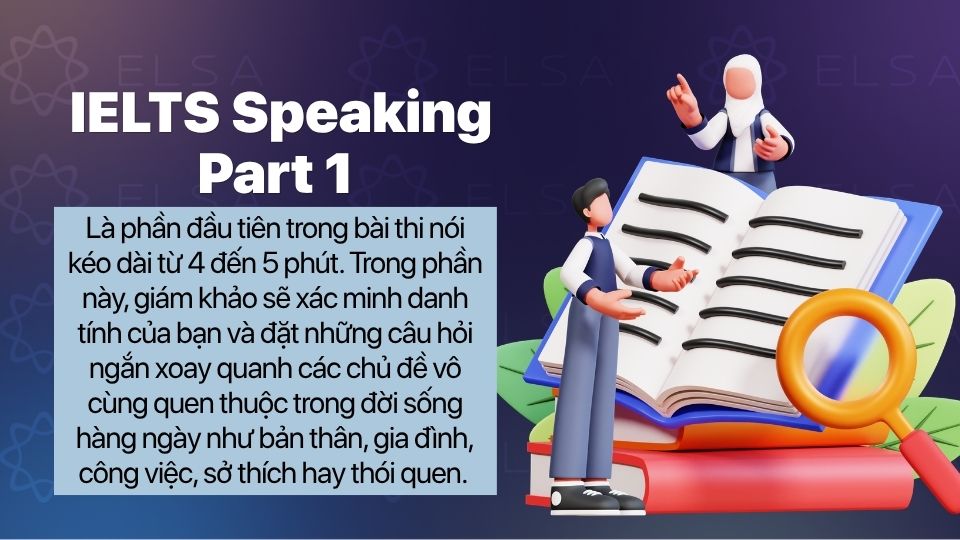
Để chuẩn bị tốt nhất, người học cần nhận diện được các dạng câu hỏi cốt lõi mà giám khảo thường triển khai:
- Dạng câu hỏi về sở thích (Liking/Disliking questions): Khai thác mức độ yêu thích hoặc không yêu thích của người nói đối với một người, sự vật, hoạt động hay vấn đề cụ thể.
- Dạng câu hỏi về tần suất (Frequency questions): Hỏi về mức độ thường xuyên thực hiện một hành động hoặc tham gia vào một hoạt động, thường sử dụng cấu trúc How often.
- Dạng câu hỏi về loại hình (Types of questions): Yêu cầu người trả lời nêu, phân loại hoặc mô tả các loại, hình thức hoặc đặc điểm của một đối tượng.
- Dạng câu hỏi về sự thay đổi theo thời gian (Past vs Present/Changes questions): Yêu cầu so sánh thói quen, sở thích, quan điểm hoặc tình huống giữa quá khứ và hiện tại, đồng thời giải thích những thay đổi nếu có.
- Dạng câu hỏi lựa chọn (Yes/No hoặc Choice questions): Yêu cầu người trả lời đưa ra lựa chọn, bày tỏ sự đồng ý hoặc không đồng ý, hoặc chọn giữa hai hay nhiều phương án và giải thích lý do.
Để không bị lúng túng trước lượng chủ đề thi nói khổng lồ và biến đổi liên tục qua từng quý, cách tối ưu nhất là học từ vựng theo cụm và sơ đồ tư duy, bạn có thể tra cứu nhanh danh sách từ vựng IELTS theo chủ đề để hệ thống hóa kiến thức bài bản trước ngày thi.
>> Đừng để việc luyện thi trở thành nỗi lo lắng, hãy để ELSA Speak đồng hành cùng bạn bứt phá từ band 5.0 lên 8.0 với các lộ trình luyện thi IELTS chuyên biệt và lộ trình học tập tối ưu nhất!
Câu hỏi IELTS Speaking part 1 theo từng chủ đề
Work/ Study
Đây là một trong những chủ đề xuất hiện thường xuyên nhất trong IELTS Speaking Part 1. Nếu bạn đang đi làm, hãy tham khảo các câu trả lời về Work. Nếu đang là học sinh hoặc sinh viên, bạn có thể thay thế bằng thông tin phù hợp với bản thân.
| Câu hỏi | Cách trả lời |
| 1. Do you work or are you a student? | Currently, I’m working as a marketing executive for a local agency. I graduated from university two years ago and jumped straight into this career because I’ve always been fascinated by advertising. |
| 2. Do you like your job/study? | Yes, I really enjoy it. Every day brings a new challenge, and I get to cooperate with a lot of creative people. It can be quite stressful when deadlines approach, but the feeling of completing a successful project is very rewarding. |
| 3. Why did you choose this job/major? | To be honest, I chose it because it matches my personality. I’m a bit of an extrovert and I enjoy brainstorming new ideas, so a dynamic environment like marketing feels like the perfect fit for me. |
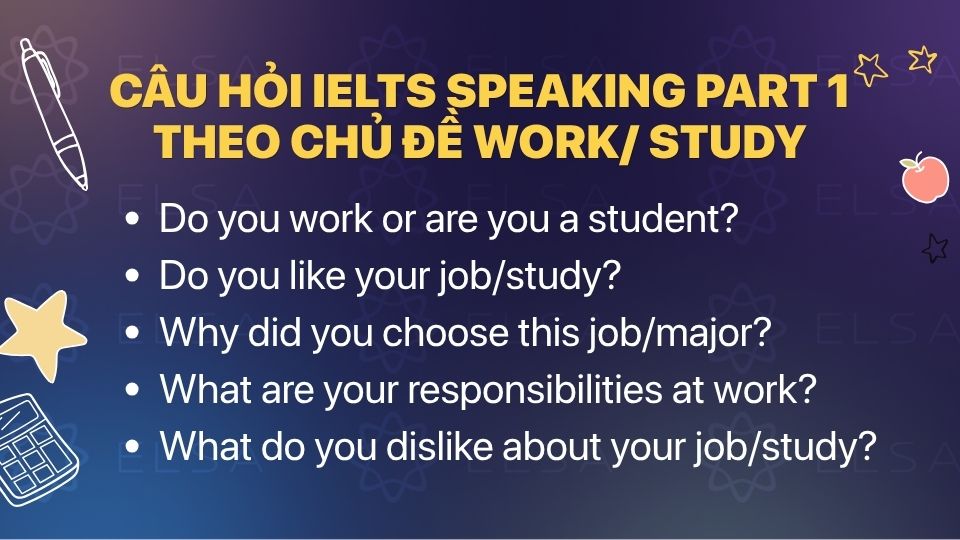
10 câu hỏi thường gặp khác về chủ đề Work/Study:
- What are your responsibilities at work?
- What do you dislike about your job/study?
- Is there anything you want to change about your workplace or school?
- What subjects are you studying?
- Which subject do you enjoy studying the most?
- Do you prefer studying alone or with other people?
- Would you like to change your job in the future?
- Is your job very stressful?
- What was your first day at work or university like?
- Do you think you will continue doing this job for a long time?
>> Tham khảo bài mẫu về Talk about your future job để luyện tập cách trả lời một trong những chủ đề phổ biến của IELTS Speaking.
Accommodation
Bên cạnh công việc và học tập, không gian sống cũng là chủ đề kinh điển giúp giám khảo đánh giá khả năng mô tả và sử dụng từ vựng đời thường của bạn. Cùng tham khảo các câu hỏi và cách trả lời ấn tượng sau đây:
| Câu hỏi | Cách trả lời |
| 1. Do you live in a house or a flat? | Currently, I live in a comfortable flat located on the tenth floor of a modern residential building in the city center. |
| 2. What is your favourite room in your home? | Without a doubt, it’s my bedroom because it provides me with a private, serene space to relax, read books, and listen to music after a hectic day. |
| 3. Will you move to another place to live in the future? | I suppose so. In the long run, I plan to purchase a spacious house with a small backyard garden in the suburbs to enjoy fresher air and a peaceful atmosphere. |
10 câu hỏi thường gặp khác về chủ đề Accommodation:
- Can you describe the house or flat you live in?
- How long have you lived there?
- What can you see from the windows of your home?
- Do you live with your family or alone?
- What would you like to change about your current home?
- Is your home near any convenient facilities?
- Do you prefer living in a house or an apartment?
- Which room does your family spend the most time together in?
- How is your neighborhood like?
- Do you plan to redecorate your home soon?
>> Tiếp tục luyện Speaking với Talk about your hometown để tham khảo câu trả lời mẫu và cách triển khai ý tưởng mạch lạc.
Holiday
Những câu hỏi về kỳ nghỉ thường được dùng để khai thác thói quen cá nhân và các trải nghiệm trong quá khứ của thí sinh. Hãy xem cách triển khai câu trả lời tự nhiên cho chủ đề này ngay dưới đây:
| Câu hỏi | Cách trả lời |
| 1. What do you usually do on holidays? | During public holidays, I prefer taking a short trip to coastal destinations with my close friends or returning to my hometown to visit my extended family. |
| 2. Do you prefer traveling alone or in a group during holidays? | I definitely lean towards traveling in a group. Sharing memorable activities, trying new culinary delicacies, and taking pictures together make the trip much more fulfilling. |
| 3. What was your most memorable holiday? | That would be my spontaneous trip to Da Lat three years ago. The chilly mist, pristine pine forests, and stunning flower valleys left an indelible impression on me. |
10 câu hỏi thường gặp khác về chủ đề Holiday:
- How many public holidays do you have in your country?
- Do you prefer long holidays or short breaks?
- What do people in your country usually do during national holidays?
- Do you think holidays are important for working people?
- Where do you want to spend your next holiday?
- Did you enjoy holidays more when you were a child?
- Is there any country you want to visit on holiday?
- Do you like active holidays or relaxing ones?
- Do you spend a lot of money when you go on holiday?
- What is your favorite time of the year for a holiday?
Travel
Du lịch là chủ đề tuyệt vời để bạn thể hiện vốn từ vựng thuộc nhóm sở thích và mô tả địa danh. Dưới đây là 3 câu hỏi phổ biến giúp bạn ghi điểm mượt mà trước ban giám khảo:
| Câu hỏi | Cách trả lời |
| 1. Do you like traveling? | Absolutely, I am a massive travel enthusiast. Exploring unfamiliar regions allows me to escape the daily grind and broaden my horizons regarding foreign customs. |
| 2. Which country would you like to visit in the future? | Japan is at the absolute top of my bucket list. I am highly captivated by its unique blend of futuristic technology, pristine historical shrines, and exceptional culinary arts. |
| 3. What kind of places do you like to travel to? | I am generally drawn to peaceful natural landscapes, such as majestic mountainous areas or pristine beaches, rather than commercialized, crowded metropolises. |
10 câu hỏi thường gặp khác về chủ đề Travel:
- Do you prefer traveling by plane or by train?
- What is the longest journey you have ever taken?
- Do you like to explore historical places when you travel?
- What do you always pack when you go on a trip?
- Do you prefer international travel or domestic travel?
- How do you find information about the places you want to visit?
- Do you enjoy spontaneous trips or planned itineraries?
- What are the benefits of traveling for young people?
- Have you ever experienced any problems while traveling?
- Do you like taking photographs during your travels?
Weather & Seasons
Thời tiết là một chủ đề tuy đơn giản nhưng lại rất dễ gặp trong phòng thi nhằm giúp thí sinh khởi động phản xạ. Bạn có thể tham khảo các câu hỏi và cách phát triển ý cụ thể tại bảng dưới đây:
| Câu hỏi | Cách trả lời |
| 1. What kind of weather do you like most? | Cool, sunny weather during autumn is my absolute favorite, as it is highly comfortable for taking long walks or participating in outdoor physical recreations. |
| 2. Does the weather affect your mood? | To some extent, yes. Overcast, rainy days tend to make me feel a bit lethargic and down, whereas bright sunlight instantly boosts my overall energy levels. |
| 3. What do you usually do when it rains? | I prefer staying indoors, brewing a warm cup of black tea, listening to acoustic music, or watching trending movie series on my laptop. |
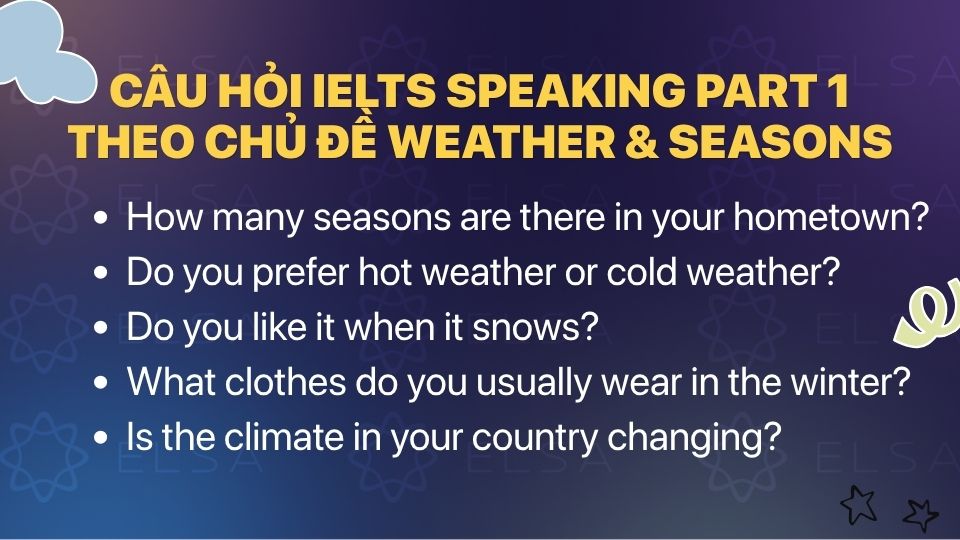
10 câu hỏi thường gặp khác về chủ đề Weather & Seasons:
- How many seasons are there in your hometown?
- Do you prefer hot weather or cold weather?
- What is the most severe weather event you have experienced?
- Does the weather ever change your weekend plans?
- Which season is the most beautiful in your country?
- Do you like it when it snows?
- What clothes do you usually wear in the winter?
- Is the climate in your country changing?
- Do you prefer indoor or outdoor activities during summer?
- Why do people talk about the weather when they first meet?
>> Muốn tự tin trả lời các chủ đề về thời tiết trong IELTS Speaking? Hãy khám phá Từ vựng về thời tiết trong tiếng Anh để mở rộng vốn từ và diễn đạt tự nhiên hơn.
Technology
Công nghệ ngày càng thay đổi đời sống, do đó giám khảo rất thường xuyên đưa chủ đề này vào phần thi nói để kiểm tra tư duy thực tế của thí sinh. Hãy bỏ túi ngay các mẫu câu trả lời thông dụng sau:
| Câu hỏi | Cách trả lời |
| 1. What technology do you use most often in your daily life? | My smartphone is an absolute necessity that I utilize constantly for communication, checking work schedules, checking maps, and streaming informative podcasts. |
| 2. Do you think technology has changed the way people communicate? | Definitely. Digital platforms and social network software enable individuals to establish instant connections globally, though it occasionally reduces authentic face-to-face interactions. |
| 3. Are there any technological devices you find difficult to use? | Advanced digital cameras with complicated manual exposure adjustments and professional lenses often confuse me, as I am more accustomed to basic point-and-shoot functions. |
10 câu hỏi thường gặp khác về chủ đề Technology:
- What was the first technological gadget you owned?
- Do you think children should use smartphones or tablets?
- How has the internet changed your work or study routine?
- Do you enjoy using smart home devices?
- What technology could you not live without?
- Do you think robots will replace humans in many jobs?
- How often do you upgrade your electronic devices?
- Do you prefer reading paper books or e-books?
- Is technology a distraction for students nowadays?
- What kind of new technology would you like to see invented?
Public Transportation
Các câu hỏi liên quan đến phương tiện giao thông công cộng sẽ kiểm tra khả năng trình bày quan điểm cá nhân và thực trạng tại nơi bạn sinh sống. Cùng theo dõi các câu hỏi và gợi ý trả lời chuẩn xác:
| Câu hỏi | Cách trả lời |
| 1. Do you often use public transportation? | Yes, I regularly commute via the urban electric train network because it allows me to bypass stressful traffic jams during morning peak hours. |
| 2. What is the most popular means of transport in your country? | Motorbikes are overwhelmingly the most dominant mode of transportation due to their absolute flexibility and high convenience in navigating narrow city alleys. |
| 3. How could public transport in your city be improved? | The local municipal authorities should expand the network routes, introduce modern electric buses, and ensure punctual arrival times to encourage more citizens to commute. |
Bên cạnh các phương tiện giao thông công cộng, khi giám khảo khai thác sâu hơn về ô tô cá nhân hoặc xu hướng xe điện thông minh, việc nắm vững bộ tiếng Anh chuyên ngành ô tô sẽ giúp bạn tự tin mô tả chính xác về kiểu dáng xe, trang bị nội ngoại thất cũng như các tính năng an toàn hiện đại.
10 câu hỏi thường gặp khác về chủ đề Public Transportation:
- Is public transport expensive in your city?
- Do you prefer taking a bus or a taxi?
- What are the disadvantages of driving a private car?
- Do elderly people get discounts on public transport in your country?
- How do you pass the time when you are on a bus or train?
- Is traffic congestion a major issue where you live?
- Do you think people should cycle more instead of taking cars?
- Have you ever missed a train or bus for an important event?
- Is it safe to use public transport late at night in your town?
- How do children usually travel to school in your country?
>> Đừng quên tham khảo Từ vựng tiếng Anh về phương tiện giao thông để bổ sung từ vựng theo chủ đề và nâng cao khả năng giao tiếp cũng như làm bài thi IELTS.
The area you live in
Chủ đề này tập trung khai thác thông tin về khu vực lân cận xung quanh nơi bạn đang trú ngụ. Để giới thiệu một cách sinh động và ghi điểm tốt, hãy chú ý đến cấu trúc triển khai ý dưới đây:
| Câu hỏi | Cách trả lời |
| 1. Can you describe the area where you live? | I reside in a vibrant residential neighborhood characterized by tree-lined streets, multiple high-rise apartment clusters, and an abundance of green amenities. |
| 2. What do you like most about your neighborhood? | The sheer convenience is exceptional. There are various supermarkets, cozy neighborhood bistros, and a public park situated within comfortable walking distance. |
| 3. Is it a good place for young people to live? | Highly recommended. It offers a safe, clean environment combined with numerous entertainment options and active fitness centers that appeal to dynamic individuals. |
10 câu hỏi thường gặp khác về chủ đề The area you live in:
- What kinds of people live in your area?
- Has your neighborhood changed much since you were a child?
- Are there any shopping malls or markets near your house?
- Is your area noisy or quiet?
- Do you think it is a safe place to raise children?
- What facility is missing in your neighborhood?
- Do you get along well with the local residents?
- Is your area popular with tourists?
- Would you like to live in a different neighborhood?
- How clean are the streets in your local area?
Relax
Cân bằng cuộc sống và các hoạt động thư giãn sau giờ làm việc, học tập là khía cạnh quen thuộc thường xuyên được đưa vào đề thi. Dưới đây là các câu hỏi giúp bạn ghi điểm Fluency hiệu quả:
| Câu hỏi | Cách trả lời |
| 1. What do you usually do to relax after a stressful day? | I practice mild physical stretches, practice meditation techniques, or take a long warm bath to fully relieve physical and mental tension. |
| 2. Do you prefer relaxing indoors or outdoors? | It generally depends on my energy level. If I feel physically exhausted, I prefer staying indoors; otherwise, jogging through a quiet botanical park helps clear my mind. |
| 3. Did you have more time to relax when you were younger? | Certainly. Back in my childhood days, I had virtually zero professional duties or complex financial pressures, allowing me to enjoy unrestricted play hours every day. |
10 câu hỏi thường gặp khác về chủ đề Relax:
- Do you think music helps people to unwind?
- How do your family members prefer to relax?
- Do you find reading a good way to rest?
- Is it easy for you to take a nap during the day?
- Do you think people have enough time to relax nowadays?
- What are the consequences of not taking enough breaks?
- Do you like going to a spa or massage center to relax?
- Does spending time in nature help you feel less stressed?
- Do you use social media as a way to clear your mind?
- What is your favorite weekend activity for pure relaxation?
Khi nói về sở thích khi thư giãn, dùng cấu trúc keen on thay cho I like sẽ giúp câu trả lời đa dạng và ghi điểm từ vựng hơn.
Festivals
Văn hóa và lễ hội truyền thống là mảnh đất màu mỡ để người học sử dụng các cấu trúc câu phức và từ vựng đặc trưng. Hãy tham khảo ngay 3 câu hỏi mẫu dưới đây để có sự chuẩn bị tốt nhất:
| Câu hỏi | Cách trả lời |
| 1. What is your favorite traditional festival in your country? | The Lunar New Year, known locally as Tet, is my absolute favorite because it is a sacred time for complete family reunions and honoring ancestral heritage. |
| 2. How do people usually celebrate important festivals? | Citizens generally clean their residences, prepare elaborate traditional banquets, don elegant attire, and exchange heartfelt wishes along with red envelopes containing lucky money. |
| 3. Do you think festivals are important for society? | Crucially important. They serve as a cultural anchor that reinforces social cohesion, keeps rich historical identities alive, and allows individuals to destress from work. |
10 câu hỏi thường gặp khác về chủ đề Festivals:
- Do you prefer modern music festivals or traditional ones?
- What is the next major celebration in your country?
- Do foreign tourists enjoy local traditional festivals?
- What clothes do people wear during festive seasons?
- Are there any special events or games played at festivals?
- Do you think some traditional festivals are losing their meaning?
- What type of food is prepared exclusively for festive holidays?
- Did you celebrate festivals differently when you were younger?
- Should schools close down during cultural celebrations?
- What is your favorite memory of a childhood celebration?
>> Bên cạnh việc luyện trả lời các câu hỏi IELTS Speaking Part 1, bạn cũng nên mở rộng vốn từ vựng và khả năng đọc hiểu. Hãy tham khảo thêm cách viết đoạn văn về lễ hội bằng tiếng Anh để cải thiện kỹ năng đọc và nâng cao vốn từ vựng hiệu quả.
Patience
Kiên nhẫn là một chủ đề thuộc nhóm tính cách cá nhân, đòi hỏi bạn phải có vốn từ mô tả trạng thái tinh thần tốt. Sau đây là danh sách các câu hỏi hay ra nhất liên quan đến chủ đề này để bạn tự luyện tập:
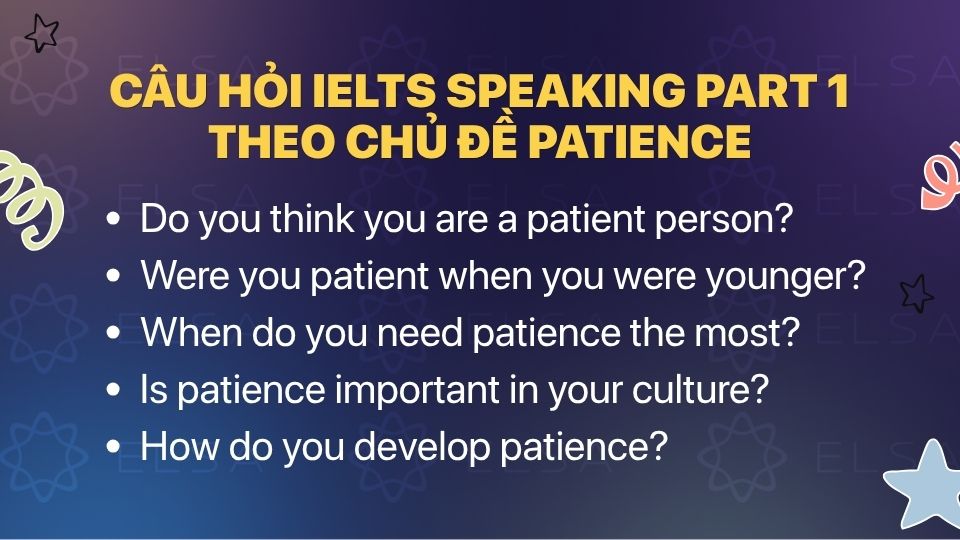
- Do you think you are a patient person?
- Were you patient when you were younger?
- How do you feel when other people are impatient?
- When do you need patience the most?
- Is patience important in your culture?
- Can software or apps help people become more patient?
- Do you think people are less patient now than in the past?
- How do you develop patience?
- Does job hunting require patience?
- Can impatience lead to mistakes?
- Do you lose your patience easily when you are tired?
- Should parents teach patience to their children early?
- Is patience required in customer service jobs?
Color
Màu sắc là chủ đề mang tính trực quan cao và thường được kết hợp hỏi cùng sở thích mua sắm hoặc trang phục. Hãy chuẩn bị câu trả lời cho danh sách câu hỏi đa dạng dưới đây:
- What is your favourite color?
- Do you like dark colors or bright colors?
- What color clothes do you usually wear?
- Is color important when you buy a car?
- What colors are popular in your country?
- Did you like the same colors when you were a child?
- Do you think colors can affect a person’s mood?
- What color would you never choose for your bedroom walls?
- Do colors have special meanings in your culture?
- Does the color of a product influence your shopping choice?
- Do you think men and women prefer different colors?
- What color represents your personality?
- Should public offices be painted in bright colors?
Gardens/Parks
Không gian xanh trong lòng thành phố là chủ đề lý tưởng để khai thác sở thích thư giãn ngoài trời của thí sinh. Dưới đây là trọn bộ câu hỏi để bạn tự xây dựng dàn ý cho riêng mình:
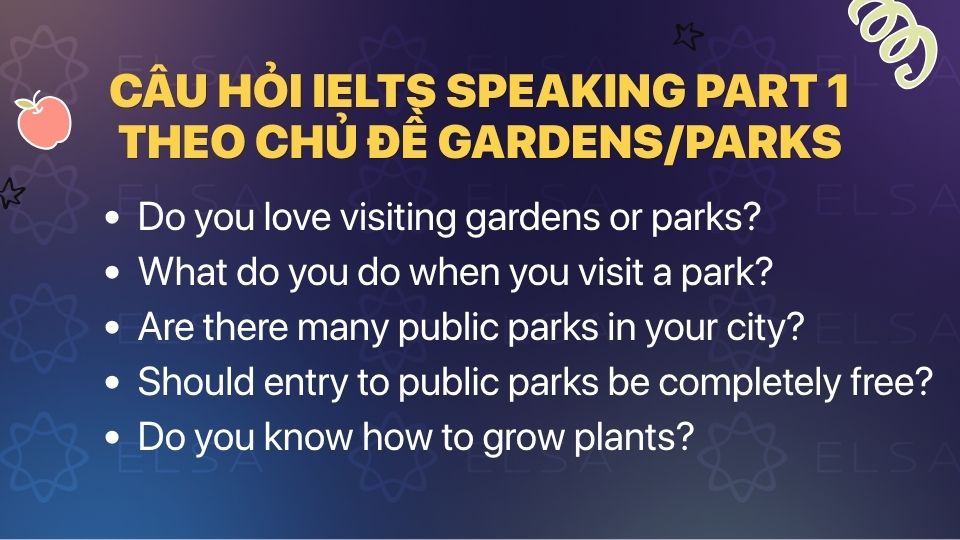
- Do you love visiting gardens or parks?
- What do you do when you visit a park?
- Are there many public parks in your city?
- Did you play in parks when you were a child?
- Would you like to have your own garden in the future?
- Do you think public parks are important for citizens?
- Are gardens popular tourist destinations in your country?
- Do you know how to grow plants?
- Should entry to public parks be completely free?
- Do you prefer modern parks or natural forests?
- Are there many street plants along the roads in your town?
- Do people in your town gather in parks for morning exercises?
- Is littering a major problem in your local parks?
>> Nếu bạn muốn tìm hiểu sâu hơn về chủ đề này, hãy xem ngay bài đọc Urban Farming: Giải Cam 18 Test 1 Reading Passage 1 chi tiết để khám phá thêm từ vựng và cách sử dụng chủ đề này trong tiếng Anh.
Morning routine
Các thói quen vào buổi sáng giúp giám khảo khai thác tốt khả năng sử dụng các trạng từ chỉ tần suất và các liên từ chỉ thời gian của bạn. Hãy luyện phản xạ với danh sách câu hỏi sau:
- What is your morning routine?
- Do you like mornings?
- Is your morning routine different on weekends?
- Did you have the same routine when you were younger?
- What is the most important part of your morning?
- Do you prefer a busy morning or a relaxed one?
- Do you exercise in the morning?
- What happens if you break your morning routine?
- Do you check your phone immediately after waking up?
- How do you prepare for your morning the night before?
- Does your morning routine change according to the weather?
- Do you think a fixed morning routine ensures a productive day?
- Who helped you establish your childhood morning habits?
Neighborhood
Khu phố nơi bạn sống chứa đựng rất nhiều khía cạnh có thể hỏi, từ cơ sở vật chất cho đến mối quan hệ với hàng xóm. Dưới đây là ngân hàng câu hỏi tổng hợp dành cho bạn:
- Do you like your neighborhood?
- What facilities are available in your neighborhood?
- Do you know your neighbors well?
- How long have you lived in this neighborhood?
- Is there anything you dislike about it?
- Has your neighborhood changed over the years?
- Would you recommend your neighborhood to others?
- Do children have safe places to play in your neighborhood?
- Is public transport easily accessible from your neighborhood?
- Do you think neighbors should help each other?
- What kind of people live in your neighborhood?
- Is it safe to walk alone at night in your neighborhood?
- Would you like to live in this neighborhood for the rest of your life?
Water
Nước và các chủ đề liên quan đến thiên nhiên, thể thao dưới nước hay việc bảo vệ nguồn nước sạch là những bẫy câu hỏi tương đối lạ. Bạn có thể tập làm quen trước thông qua các câu hỏi tiêu biểu:
- How much water do you drink every day?
- Do you prefer tap water or bottled water?
- Do you like swimming or water sports?
- Is water conservation important to you?
- Have you ever been to a place with beautiful water scenery?
- Do you think tap water is safe to drink directly in your city?
- What do you use water for most in your home?
- Why do people like living near water bodies?
- Do you think water pollution is a serious issue?
- Can technology solve water shortage problems?
- Do you prefer sparkling water or still water?
- Have you ever experienced a water supply shortage?
- Does your city have severe flooding problems during winter?
New Year
Tương tự như chủ đề Festivals, dịp năm mới mang lại rất nhiều chất liệu về phong tục tập quán và các trải nghiệm sum họp gia đình đáng quý. Hãy chuẩn bị vốn từ vững chắc qua bộ câu hỏi sau:
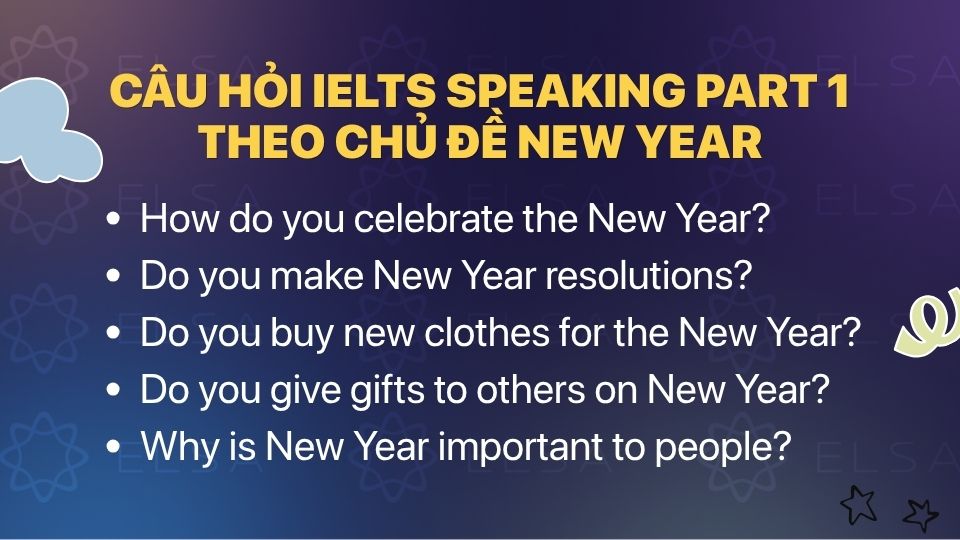
- How do you celebrate the New Year?
- Do you prefer Lunar New Year or Western New Year?
- Do you make New Year resolutions?
- What is the most popular food during New Year?
- Do you buy new clothes for the New Year?
- How do you feel during the festive season of New Year?
- Do you give gifts to others on New Year?
- What was your most memorable New Year celebration?
- Do you think New Year traditions are changing?
- Why is New Year important to people?
- Do shops close down during New Year in your city?
- Do you like watching the New Year countdown events?
- What is your main goal for the upcoming New Year?
Future Plans
Khi hỏi về các dự định trong tương lai, giám khảo muốn kiểm tra khả năng sử dụng linh hoạt các cấu trúc ngữ pháp dự đoán hoặc mong muốn của bạn. Cùng xem qua các câu hỏi phổ biến sau:
- What are your plans for the near future?
- Where do you see yourself in five years?
- Do you like making long-term plans?
- Will you travel abroad in the coming months?
- Is it important for young people to plan their future?
- Have your future goals changed since you left high school?
- How do you handle it when your plans fail?
- Do you plan to start your own business someday?
- Will you live in the same city for the rest of your life?
- What is your plan for this upcoming weekend?
- Do you discuss your career goals with your parents?
- Are you planning to purchase any major properties soon?
- What personal habits do you plan to change this year?
Conversation with stranger
Trò chuyện với người lạ là một khía cạnh giao tiếp xã hội thú vị, đòi hỏi bạn phải liên hệ nhiều đến yếu tố tính cách và văn hóa quốc gia. Hãy chuẩn bị ý tưởng dựa trên danh sách câu hỏi dưới đây:
- Do you easily start a conversation with a stranger?
- When was the last time you talked to a stranger?
- Is it common to talk to strangers in your culture?
- Where is the best place to make new friends?
- Do you feel nervous when talking to someone you don’t know?
- Can talking to strangers be dangerous?
- What topics are safe to discuss with a stranger?
- Did your parents teach you not to talk to strangers?
- Do you enjoy meeting people from different cultural backgrounds?
- How do you politely end a conversation with a stranger?
- Do you prefer interacting online or in person with new people?
- Have you ever helped a stranger on the street?
- Do you think technology has made people more isolated from strangers?
Taking a rest (break)
Nghỉ ngơi giữa giờ làm việc hay học tập là một chủ đề ngách cực kỳ thông dụng trong các bộ đề thi IELTS gần đây. Bạn nên chú ý luyện tập kỹ với các câu hỏi sau để không bị bất ngờ:
- How often do you take a break during work or study?
- What do you do during your breaks?
- Do you think taking rests improves your efficiency?
- What happens if you don’t take enough rest?
- Do you prefer short frequent breaks or one long break?
- Is it easy for you to switch off your brain during a rest?
- Do you use your phone during short breaks?
- What is your ultimate way to recover energy after an exam?
- Does your company encourage employees to take rests?
- Why do some people feel guilty about resting?
- Do you like taking a short nap at noon?
- What kind of places do you choose for a weekend rest?
- Did you rest more during your high school years compared to now?
Decoration
Việc trang trí nhà cửa hoặc phòng ngủ cá nhân giúp bạn khoe được các từ vựng về thẩm mỹ, màu sắc và đồ nội thất. Cùng tham khảo danh sách câu hỏi tổng hợp cho chủ đề này:
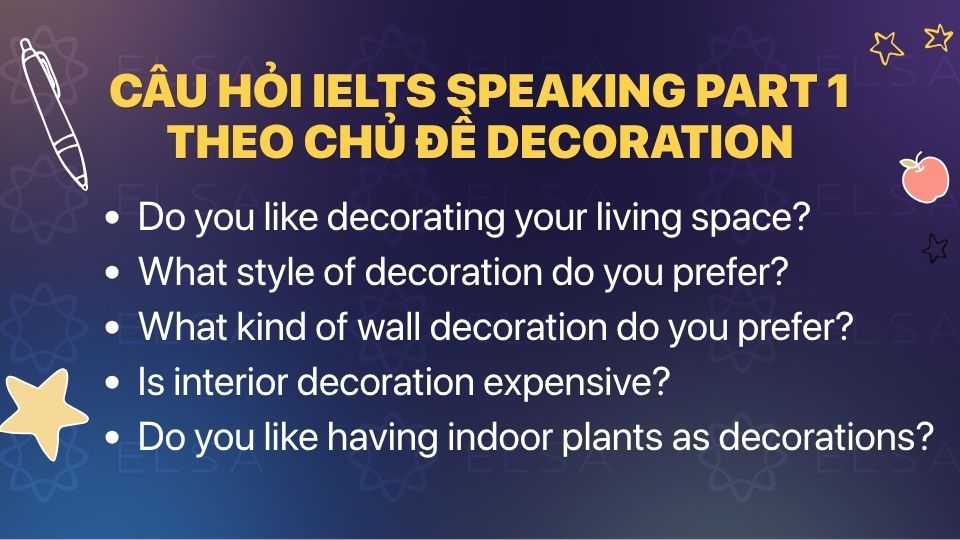
- Do you like decorating your living space?
- What style of decoration do you prefer?
- What is the most important decoration in your room?
- Do people in your country decorate houses for festivals?
- Is interior decoration expensive?
- Who chose the decorations for your current home?
- Do you like having indoor plants as decorations?
- How often do you change your house decorations?
- Does office decoration affect employee productivity?
- What kind of wall decoration do you prefer?
- Did you decorate your bedroom yourself when you were a teenager?
- Do you think lighting is an important decorative element?
- What decorative items would you buy if you had unlimited money?
TV program
Mặc dù truyền hình truyền thống đang dịch chuyển sang các nền tảng số, chủ đề về các chương trình giải trí trên TV vẫn giữ một vị trí quen thuộc trong bài thi nói. Dưới đây là các câu hỏi bạn cần lưu tâm:
- Do you watch TV programs often?
- What kind of TV programs do you like most?
- Did you watch more TV when you were younger?
- Do you prefer watching TV alone or with family?
- Are reality TV shows popular in your nation?
- Do you think children watch too much TV nowadays?
- Can TV programs be educational?
- Do you dislike commercial advertisements on TV?
- Do you watch international TV programs?
- What is the most popular TV channel in your country?
- Do you ever rewatch your favorite TV shows?
- How do you find recommendations for new TV series?
- Will traditional television completely disappear due to internet streaming?
>> Tiếp tục luyện Speaking với Talk about your favorite TV program để tham khảo câu trả lời mẫu và cách diễn đạt tự nhiên.
Special costumes
Trang phục đặc biệt hoặc trang phục truyền thống là chủ đề đòi hỏi bạn phải biết cách kết hợp giữa việc mô tả chất liệu, thiết kế và các sự kiện trang trọng đặc thù. Cùng xem qua bộ câu hỏi dưới đây:
- When do people wear special costumes in your country?
- Do you own any traditional costumes?
- Do you enjoy wearing special costumes?
- Did you ever wear a costume for a school play?
- Are special costumes expensive to buy?
- Do you think traditional costumes will disappear in the future?
- What do you think about western-style costumes like suits?
- Do people wear special costumes for Halloween in your city?
- Is comfort more important than appearance when choosing a costume?
- Should flight attendants wear traditional costumes?
- Do people wear historical costumes in modern fashion shows?
- Are there any professions that require special protective costumes?
- How do you feel when you see foreign tourists trying on your traditional costumes?
Wild animals
Động vật hoang dã là chủ đề giúp người học nâng band điểm từ vựng về môi trường và bảo tồn thiên nhiên. Bạn có thể tự tập trả lời theo danh sách câu hỏi này:
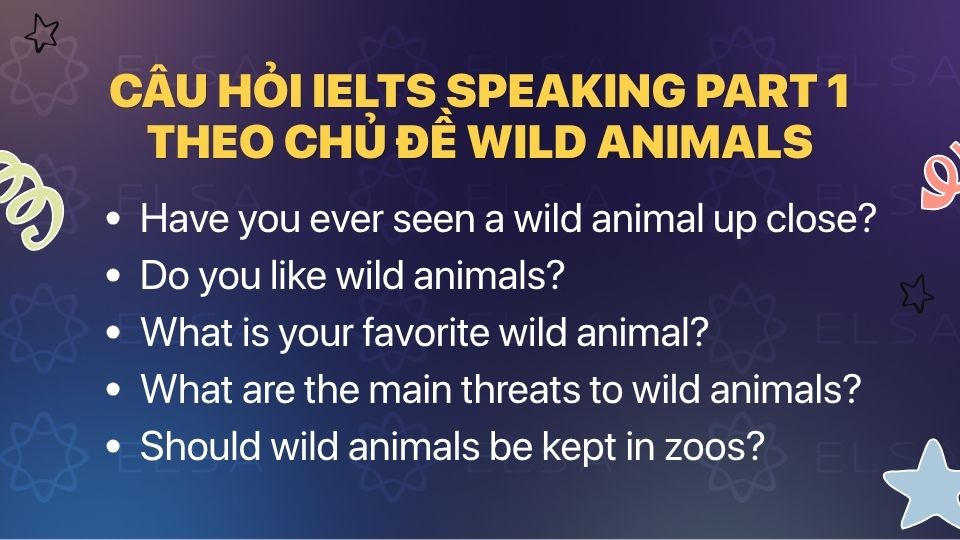
- Do you like wild animals?
- What is your favorite wild animal?
- Have you ever seen a wild animal up close?
- Do you think it is important to protect endangered species?
- What are the main threats to wild animals?
- Should wild animals be kept in zoos?
- Are there many wild animals in your country?
- Did you read books about wild animals as a child?
- Can ecotourism help wild animals?
- What can individuals do to protect wild animals?
- Do you like watching wildlife TV documentaries?
- Are people in your town afraid of wild animals?
- Should governments execute harsh punishments for illegal wildlife hunters?
>> Khám phá Từ vựng các con vật bằng tiếng Anh để làm giàu vốn từ và cải thiện kỹ năng IELTS Speaking.
Environmental protection
Bảo vệ môi trường là một chủ đề mang tính thời sự cao, đòi hỏi thí sinh phải thể hiện được nhận thức cá nhân thông qua các hành động thiết thực hàng ngày. Cùng điểm qua các câu hỏi cốt lõi của chủ đề này:
- Is environmental protection important to you?
- What do you do to protect the environment?
- Is pollution a big problem in your city?
- Does your city have recycling programs?
- Have you ever participated in a clean-up campaign?
- Should schools teach children about the environment?
- What is the most serious environmental issue today?
- Can solar energy replace fossil fuels completely?
- Do you think governments are doing enough for the environment?
- Are you optimistic about the environment’s future?
- Do you use energy-saving household appliances?
- Should plastic bags be completely banned in supermarkets?
- Has your local community organized any green tree planting events?
Chủ đề môi trường không chỉ xuất hiện trong IELTS Speaking mà còn thường được khai thác trong Reading dưới góc nhìn khoa học và bảo tồn. Nếu muốn luyện đọc qua chủ đề này, bạn có thể tham khảo bài Should we try to bring extinct species back to life? để mở rộng từ vựng về các loài tuyệt chủng và hệ sinh thái.
>> Nếu đang ôn luyện IELTS Speaking, topic Talk about global warming sẽ giúp bạn làm quen với cách trả lời tự nhiên và sử dụng từ vựng về biến đổi khí hậu một cách chính xác.
Languages
Chủ đề về ngôn ngữ rất gần gũi với người học tiếng Anh, giúp bạn dễ dàng liên hệ trực tiếp đến quá trình ôn luyện và các mục tiêu phát triển bản thân của chính mình. Hãy tham khảo ngân hàng câu hỏi sau:
- How many languages do you speak?
- Is English difficult for you to learn?
- Why are you studying English now?
- Would you like to learn another language in the future?
- What is the best way to learn a foreign language?
- Can AI apps replace human language teachers?
- Is your native language popular among foreign learners?
- Do you think learning a language changes your mindset?
- Did you start learning English at an early age?
- Why is global linguistic diversity important?
- Do you find it embarrassing to make grammar mistakes when speaking?
- What is the most difficult aspect of learning English vocabulary?
- Should all children be forced to learn a second language in primary school?
>> Tạm biệt phương pháp học truyền thống tốn kém và kém hiệu quả, hãy cùng ELSA Speak trải nghiệm lộ trình học tiếng Anh cá nhân hóa đầy tiện lợi và tiết kiệm ngay trên điện thoại của bạn.

Cách trả lời các câu hỏi IELTS Speaking Part 1
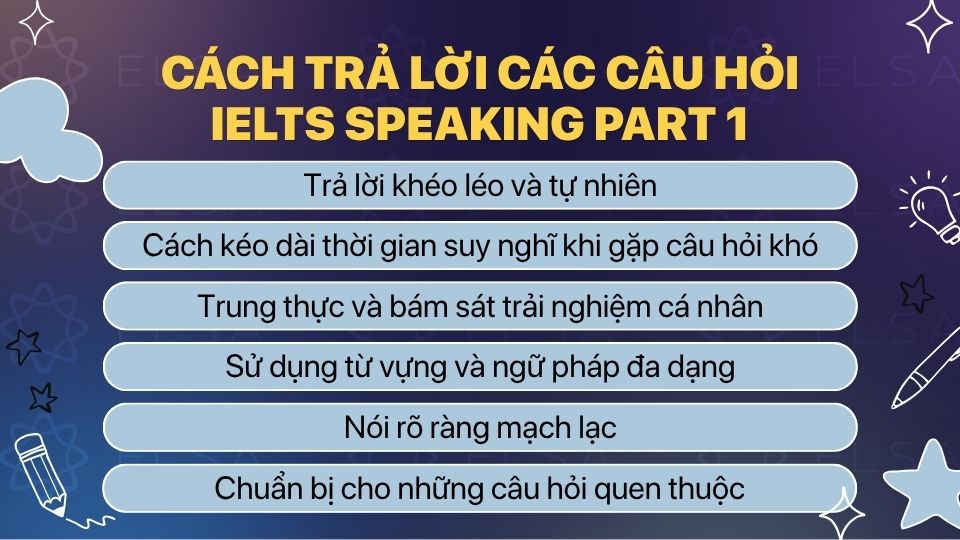
- Trả lời khéo léo và tự nhiên: Tránh học thuộc lòng câu mẫu cứng nhắc. Hãy trả lời như một cuộc trò chuyện hàng ngày bằng cách sử dụng các từ nối tự nhiên như actually, honestly, well, to be fair… để bài nói mượt mà, uyển chuyển.
- Cách kéo dài thời gian suy nghĩ khi gặp câu hỏi khó: Khi đối mặt với một câu hỏi lạ hoặc từ vựng chưa hiểu rõ, tuyệt đối không im lặng. Hãy sử dụng các cụm từ “câu giờ” thông minh để kích hoạt não bộ: “That’s a fascinating question, let me think for a second…” hoặc “To be honest, I haven’t thought about this before, but I suppose…”
- Trung thực và bám sát trải nghiệm cá nhân: Bài thi IELTS Speaking không kiểm tra kiến thức khoa học hay tính đúng sai của thông tin mà chấm điểm năng lực sử dụng ngôn ngữ. Hãy tự tin chia sẻ thật về trải nghiệm của bản thân; việc nói thật sẽ giúp bạn bật ý tưởng nhanh hơn và từ vựng tuôn ra tự nhiên hơn.
- Sử dụng từ vựng và ngữ pháp đa dạng: Đừng chỉ dùng các từ vựng lặp đi lặp lại. Hãy linh hoạt thay đổi cấu trúc câu (kết hợp giữa câu đơn, câu ghép và câu phức) và cố gắng biến đổi các từ loại hoặc cụm từ đồng nghĩa để nâng điểm tiêu chí Lexical Resource và Grammatical Range.
- Nói rõ ràng mạch lạc: Giữ tốc độ nói ổn định, tránh nói quá nhanh dẫn đến nuốt âm đuôi hoặc vấp ý. Việc ngắt nghỉ đúng dấu câu và nhấn đúng trọng âm sẽ giúp giám khảo dễ dàng theo dõi mạch lập luận của bạn.
- Chuẩn bị cho những câu hỏi quen thuộc: Luôn nằm lòng bộ câu hỏi “kinh điển” thuộc nhóm Work/Study và Accommodation. Việc chuẩn bị trước bộ từ vựng chuyên môn cho ngành nghề hay căn nhà của mình sẽ giúp bạn có một khởi đầu tự tin, làm bàn đạp tâm lý tốt cho các phần thi sau.
Các lỗi sai thường gặp
Dưới đây là các bẫy mất điểm đáng tiếc được đúc kết mà bạn cần đặc biệt lưu ý:
- Trả lời quá ngắn: Chỉ trả lời “Yes/No” mà không kéo dài câu bằng cách giải thích lý do hoặc đưa ra ví dụ cụ thể (độ dài lý tưởng từ 2 đến 3 câu).
- Lạm dụng từ vựng quá cao siêu (Slang/Idioms gượng ép): Nhồi nhét các thành ngữ cổ hoặc từ vựng học thuật C2 vào ngữ cảnh trò chuyện hàng ngày của Part 1 khiến bài nói mất tự nhiên.
- Mất kiểm soát thì động từ: Nhầm lẫn khi chia thì giữa quá khứ và hiện tại khi giám khảo hỏi về sự thay đổi thói quen theo thời gian.
- Lặp từ khóa của câu hỏi: Lấy hết tất cả các từ vựng trong câu hỏi của giám khảo vào câu trả lời thay vì sử dụng kỹ năng biến đổi từ đồng nghĩa.

Câu hỏi thường gặp
Những chủ đề nào thường xuất hiện trong Speaking Part 1?
Hai chủ đề cốt lõi bắt buộc luôn xoay vòng là Work/Study (Công việc/Học tập) và Accommodation (Nơi ở). Bên cạnh đó, các chủ đề mở rộng liên quan đến thói quen hàng ngày như Weather, Technology, Public Transportation, Leisure time cũng xuất hiện với tần suất rất cao.
Nên trả lời câu hỏi Speaking Part 1 dài bao nhiêu?
Độ dài hoàn hảo cho mỗi câu trả lời tại Part 1 là từ 2 đến 3 câu hoàn chỉnh. Bạn nên đưa ra câu trả lời trực diện ở câu đầu tiên, sau đó phát triển thêm 1 – 2 câu tiếp theo để giải thích nguyên nhân hoặc đưa ra một ví dụ minh họa thực tế.
Nếu không hiểu câu hỏi của giám khảo thì nên làm gì?
Bạn hoàn toàn có thể lịch sự nhờ giám khảo lặp lại câu hỏi hoặc giải thích từ vựng khó mà không bị trừ điểm trực tiếp. Hãy sử dụng các mẫu câu thông dụng như: “Could you please repeat the question?” hoặc “Could you clarify what you mean by [X]?”.
Band 7 cần gì khi trả lời IELTS Speaking Part 1?
Để đạt cấu trúc điểm từ Band 7 trở lên, thí sinh cần thể hiện được khả năng nói liên tục không ngập ngừng quá lâu, sử dụng linh hoạt các cụm từ collocations tự nhiên, phát âm rõ ràng, có ngữ điệu và kiểm soát tốt các lỗi sai ngữ pháp cơ bản.
Làm chủ các câu hỏi Speaking Part 1 không đòi hỏi bạn phải sử dụng những triết lý vĩ mô hay từ vựng bác học, mà chìa khóa nằm ở sự tự nhiên, trôi chảy và chính xác ngay từ những câu thoại đời thường nhất. Ghé thăm danh mục IELTS của ELSA Speak để khám phá thêm nhiều tài liệu hữu ích và những bài học thú vị khác nhé! Chúc bạn thành công!
Đang ôn thi? Quy đổi điểm IELTS, TOEFL, TOEIC, CEFR và luyện 4 kỹ năng miễn phí trong khu học tập ELSA.